

The legal landscape is undergoing a seismic shift, driven by artificial intelligence. Today's AI tools for lawyers are not futuristic concepts; they are practical, powerful solutions that automate tedious tasks, uncover critical insights, and free up attorneys to focus on high-value strategic work. From automating medical record reviews in personal injury cases to accelerating legal research and contract analysis, AI is becoming an indispensable asset for firms aiming to enhance efficiency, improve outcomes, and gain a competitive edge. This guide cuts through the noise to provide a detailed look at the most impactful AI tools available, categorizing them by function and providing practical insights to help you choose the right technology for your practice.
We will move beyond generic feature lists to deliver a resource focused on real-world application, particularly for litigators and personal injury attorneys. You will find an honest assessment of each platform’s strengths and limitations, including specific use cases, security considerations like HIPAA compliance, and notes on pricing and integration. For each tool, we provide direct links and screenshots to give you a clear view of its interface and capabilities. This resource is designed to help you confidently navigate the options and select the AI solutions that will deliver tangible results for your clients and your firm.
1. Ares
As our top choice for ai tools for lawyers, Ares distinguishes itself with a laser focus on the high-value, document-intensive workflows of personal injury law. It is an end-to-end platform designed not just to analyze documents, but to produce case-ready work product. Ares ingests raw medical records and case files, using its purpose-trained AI to extract crucial data points like diagnoses, treatment timelines, and provider details.
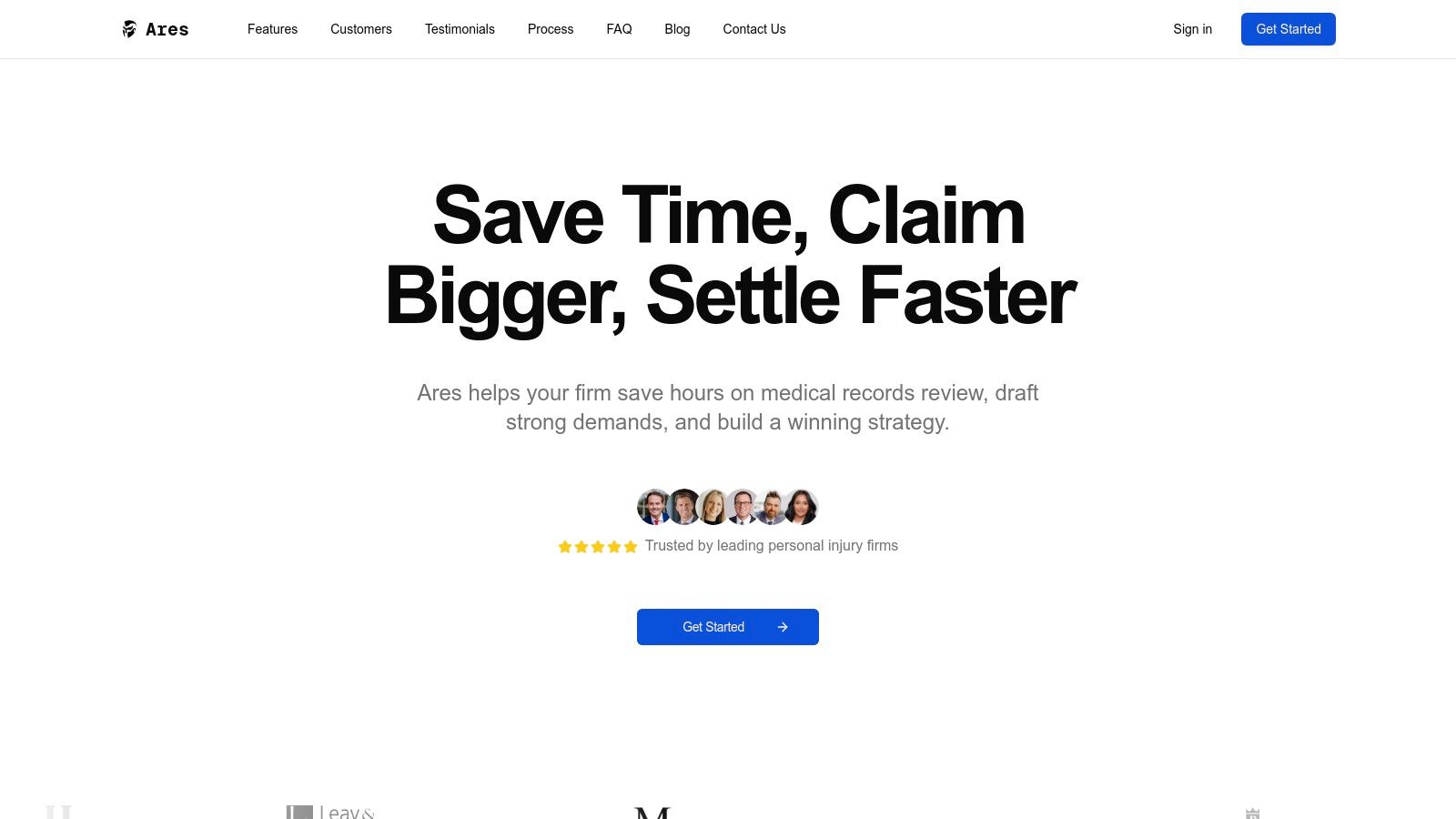
This automated analysis powers the platform's core outputs: comprehensive medical chronologies and robust demand letter drafts. The result is a dramatic reduction in the manual labor that bogs down PI firms, with users reporting savings of over 10 hours of paralegal and attorney time per case. This efficiency allows firms to manage larger caseloads effectively and move cases toward settlement faster. For a deeper dive into its specific applications, Ares provides additional resources on AI for personal injury lawyers.
Key Features and Use Cases
- Automated Medical Record Review: Upload hundreds of pages of medical records, and the AI organizes them into a clear, actionable summary. This is ideal for quickly getting up to speed on a new case or for preparing for depositions.
- Intelligent Demand Letter Drafting: The platform uses extracted medical data to generate a structured demand letter, complete with a narrative that connects treatments to the incident.
- Case Strategy Insights: By consolidating data from disparate providers, Ares helps identify gaps in treatment, chronological inconsistencies, or unaddressed symptoms, strengthening your case narrative and settlement position.
- HIPAA Compliance: Ares is built with enterprise-grade security and is HIPAA-compliant, providing the necessary safeguards for handling protected health information (PHI).
Pricing and Onboarding
Ares does not list public pricing, opting for a demo-based sales model. This suggests pricing is customized based on firm size and case volume. Prospective users must contact their team for a demonstration and quote.
| Feature | Availability |
|---|---|
| Primary Function | Medical Record Analysis & Demand Letter Drafting |
| Best For | Personal Injury Firms |
| HIPAA Compliance | Yes |
| Pricing | Custom Quote (Contact for Demo) |
| Website | areslegal.ai |
Pros:
- Saves significant time (10+ hours per case) on manual review and drafting.
- Provides end-to-end workflow support, from data extraction to demand letter generation.
- Designed specifically for PI law, ensuring relevant and accurate outputs.
- Enterprise-grade security and HIPAA compliance for handling sensitive PHI.
Cons:
- AI-generated drafts require final attorney review for accuracy and strategic nuance.
- Lack of public pricing requires scheduling a demo, which can be a hurdle for smaller firms exploring options.
2. Thomson Reuters – Westlaw Precision with CoCounsel
Westlaw Precision integrates the generative AI capabilities of CoCounsel (acquired from Casetext) directly into its authoritative legal research platform. This powerhouse combination is designed for legal professionals who need AI-powered drafting and conversational research grounded in Westlaw’s vast, editorially enhanced library. Leading platforms like Westlaw Precision with CoCounsel are at the forefront of leveraging advanced AI search tools to revolutionize legal research, making it faster and more precise.
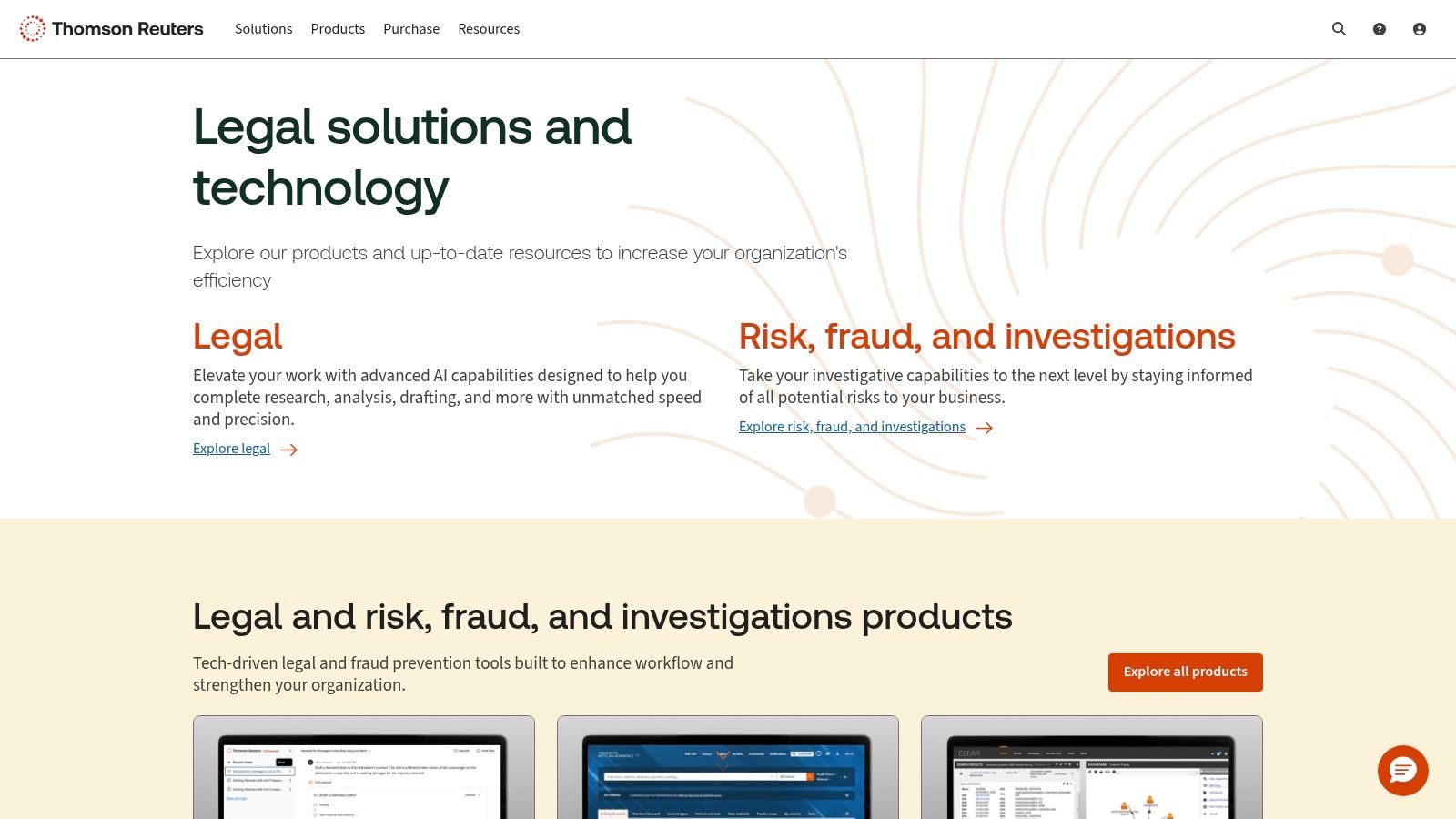
The platform excels by linking its AI-generated answers directly to trusted citations within Westlaw, leveraging foundational features like KeyCite and Key Numbers to ensure reliability. This makes it one of the most trusted AI tools for lawyers engaged in complex litigation.
Key Details & Use Cases
- Best For: Firms already invested in the Thomson Reuters ecosystem that require enterprise-grade, editorially vetted AI legal research and drafting.
- PI Use Case: A personal injury attorney can ask CoCounsel to "draft a motion to compel discovery responses for a car accident case in California, citing relevant state procedural rules" and receive a well-structured draft with clickable citations.
- Pricing: Quote-based and generally positioned at a premium, making it a significant investment for smaller firms.
- Website: legal.thomsonreuters.com
Pros:
- Trusted authority with editorially enhanced U.S. legal content.
- Deep integration across the Thomson Reuters product suite.
- Significant investment ensures continuous feature rollouts.
Cons:
- Premium pricing can be a barrier for solo practitioners or small firms.
- Maximum value is often realized by users already within the ecosystem.
3. LexisNexis – Lexis+ AI
Lexis+ AI integrates generative AI directly into the comprehensive LexisNexis ecosystem, offering a powerful suite of tools for legal research, summarization, and drafting. It leverages the platform's extensive library of primary law, secondary sources, and practical guidance to provide conversational search and document analysis capabilities with an emphasis on enterprise-grade data security and privacy. This makes it a compelling choice among AI tools for lawyers who are already embedded in the LexisNexis environment.

The platform stands out by grounding its AI-generated responses in verifiable LexisNexis content, providing linked citations to ensure accuracy and user trust. Its ability to generate case summaries, draft clauses, or answer complex legal questions based on a firm's specific jurisdiction and needs makes it a highly efficient assistant for daily legal tasks.
Key Details & Use Cases
- Best For: Law firms that rely heavily on LexisNexis's deep collection of secondary sources, practice guides, and analytical materials.
- PI Use Case: A paralegal can upload a plaintiff's deposition transcript and ask Lexis+ AI to "summarize all testimony related to the severity of the claimant's back injury and identify any inconsistencies with the initial complaint," receiving a concise, actionable summary.
- Pricing: Custom, quote-based pricing. A short free trial is available, but some activities may incur transactional charges outside the main plan.
- Website: www.lexisnexis.com
Pros:
- Deep integration with exclusive secondary sources and practice guidance.
- Strong enterprise-grade privacy, compliance, and support infrastructure.
- Continuously updated models and configurable assistants (Protégé).
Cons:
- Custom pricing model requires direct consultation.
- Potential for extra transactional charges can complicate budget predictability.
4. Bloomberg Law – Draft Analyzer and Clause Adviser
Bloomberg Law integrates powerful AI capabilities directly into its platform with tools like Draft Analyzer and Clause Adviser. These features are designed for transactional attorneys who need to benchmark clauses, analyze contract language, and streamline the drafting process by leveraging a massive database of filed agreements. This makes it an invaluable resource for corporate and M&A practices.
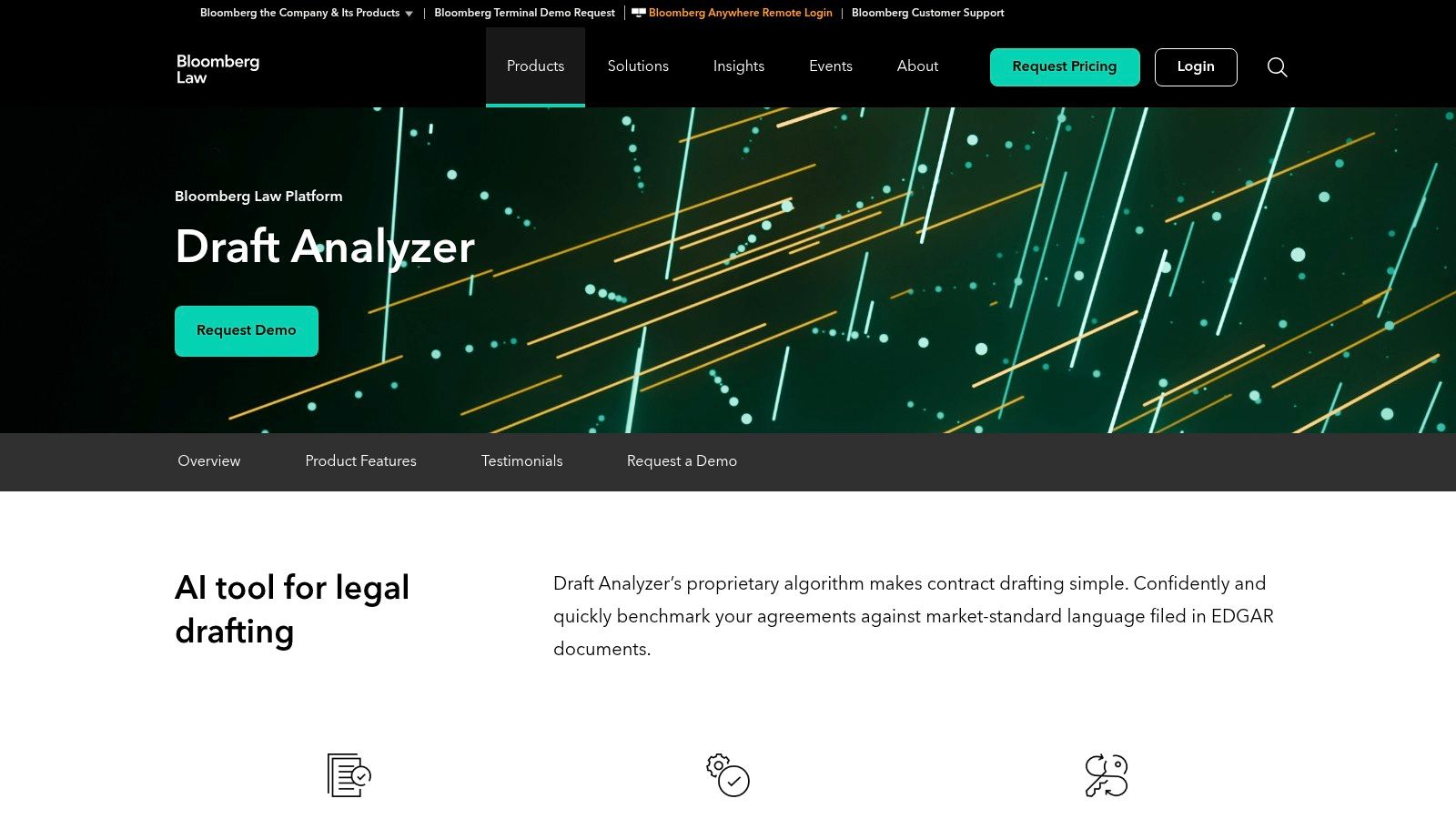
The platform stands out by offering one-click redlines and clause favorability analysis, suggesting alternative wording tilted toward either the buyer or seller. By combining these AI tools for lawyers with its integrated Practical Guidance on AI risk and compliance, Bloomberg provides a comprehensive solution for sophisticated transactional work.
Key Details & Use Cases
- Best For: Corporate and M&A attorneys who are already subscribed to Bloomberg Law and need to draft and negotiate complex agreements.
- PI Use Case: While transaction-focused, a PI firm's managing partner could use it to analyze vendor or software agreements, benchmarking clauses against market standards to ensure favorable terms for the firm.
- Pricing: Included with a Bloomberg Law subscription; not available as a standalone product. Access is tied to the platform's sales and subscription process.
- Website: pro.bloomberglaw.com
Pros:
- No extra cost for existing Bloomberg Law subscribers.
- Strong M&A precedent data with integrated drafting tools.
- Practical Guidance toolkit helps navigate AI compliance risks.
Cons:
- Requires a full Bloomberg Law subscription, which can be expensive.
- Less focused on litigation compared to other major platforms.
5. Harvey
Harvey is an enterprise-grade, domain-specific AI platform built for law firms and in-house legal teams with strict security and compliance requirements. It focuses on providing a secure, legal-tuned assistant for complex research, drafting, and knowledge management workflows. The platform distinguishes itself with its emphasis on secure deployments and enterprise controls, making it a standout among AI tools for lawyers at major global firms.

Harvey's architecture, including its secure "Vault" and deployment options on platforms like Microsoft Azure, addresses the data privacy concerns paramount to large legal organizations. Its strong backing and rapid product development signal a commitment to serving the high-stakes needs of the enterprise legal market.
Key Details & Use Cases
- Best For: Midsize to large law firms and corporate legal departments requiring a highly secure, customizable AI platform with enterprise-grade auditability.
- PI Use Case: An attorney at a large personal injury firm could use Harvey to analyze thousands of internal case documents securely to identify patterns in expert witness testimony across multiple similar cases, all within a controlled environment.
- Pricing: Enterprise-only; requires direct contact for a custom quote and implementation plan.
- Website: www.harvey.ai
Pros:
- Built for large legal teams with rigorous security and compliance needs.
- Integrates well with the Microsoft ecosystem for seamless workflow.
- Rapid product development and strong enterprise funding signals.
Cons:
- No public or self-serve pricing; enterprise sales motion is required.
- May be overkill and cost-prohibitive for solo practitioners or small firms.
6. Spellbook
Spellbook is a legal-specific AI suite designed to integrate directly into Microsoft Word, where most lawyers already perform their drafting and review tasks. It focuses on accelerating contract analysis, drafting, redlining, and identifying missing clauses through its powerful Word add-in. The platform also includes a desktop/web "Associate" app for multi-document comparisons and analysis, making it one of the more versatile AI tools for lawyers working with complex agreements.
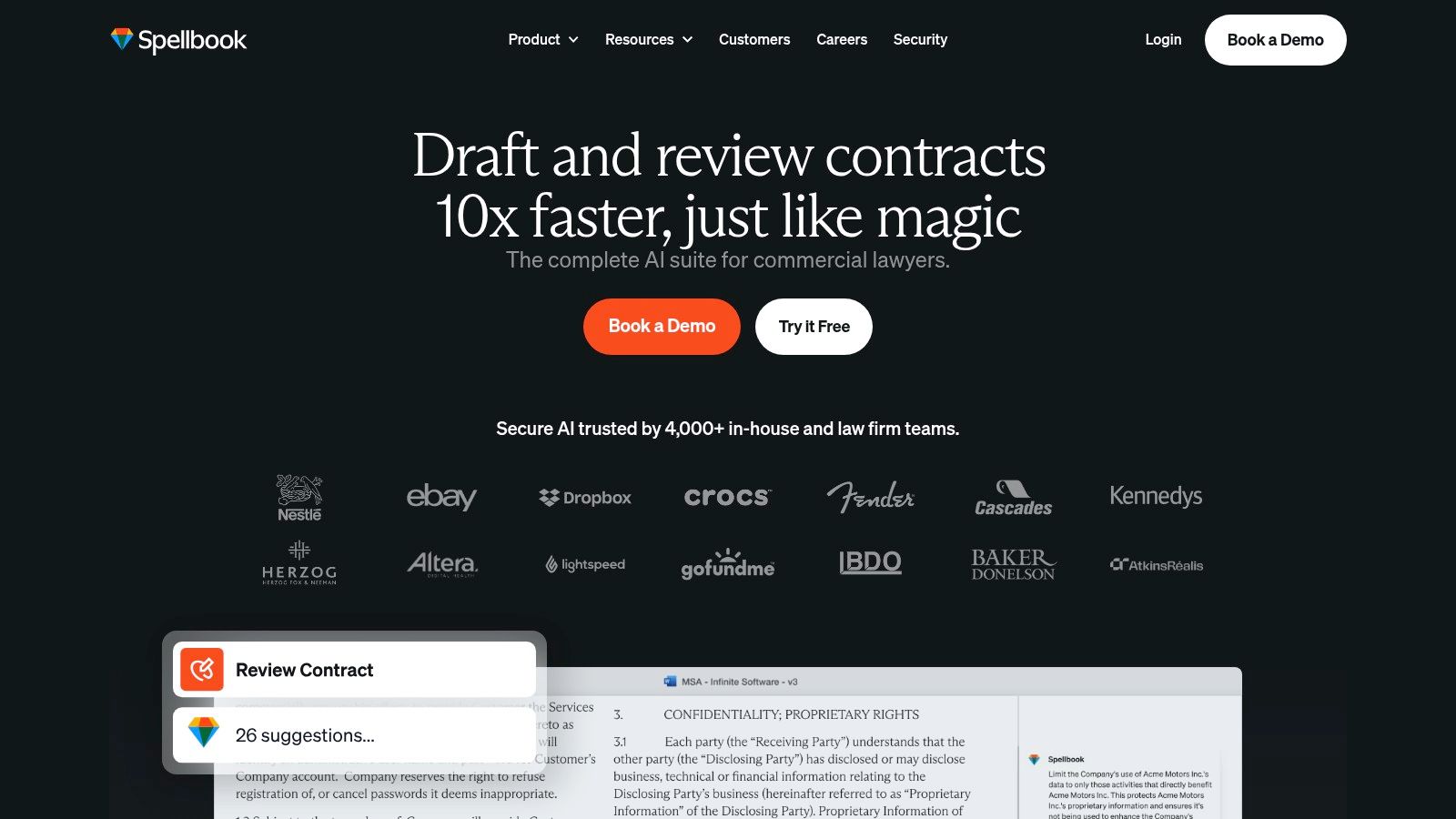
The platform stands out by meeting lawyers where they are, minimizing workflow disruption and maximizing adoption. Its commitment to security, demonstrated by SOC 2 Type II compliance and zero-data-retention options, addresses key law firm concerns about confidentiality and data privacy.
Key Details & Use Cases
- Best For: Transactional lawyers and litigation teams that heavily use Microsoft Word for contract drafting, review, and playbook compliance checks.
- PI Use Case: A personal injury paralegal can use Spellbook to quickly review a settlement agreement, flagging non-standard clauses or identifying missing provisions like confidentiality terms, ensuring compliance with the firm’s standards.
- Pricing: Custom quotes are required for team access, though a 7-day free trial is available for individual evaluation.
- Website: www.spellbook.legal
Pros:
- Works directly inside Microsoft Word, leading to a fast time-to-value.
- Strong security posture with SOC 2 Type II and data retention options.
- Clear trial process and excellent deployment documentation for IT teams.
Cons:
- Primarily focused on the Microsoft ecosystem; less ideal for firms on other platforms.
- Full team pricing requires engaging with the sales team for a custom quote.
7. LegalOn
LegalOn delivers powerful AI-driven contract review and revision capabilities designed to accelerate the drafting process while reducing risk. Its standout feature, AI Revise, provides attorney-authored guidance and suggested edits directly within the document, allowing legal teams to spot issues and apply fixes with a single click. This approach makes it one of the most practical AI tools for lawyers whose daily work involves negotiating and redlining agreements.
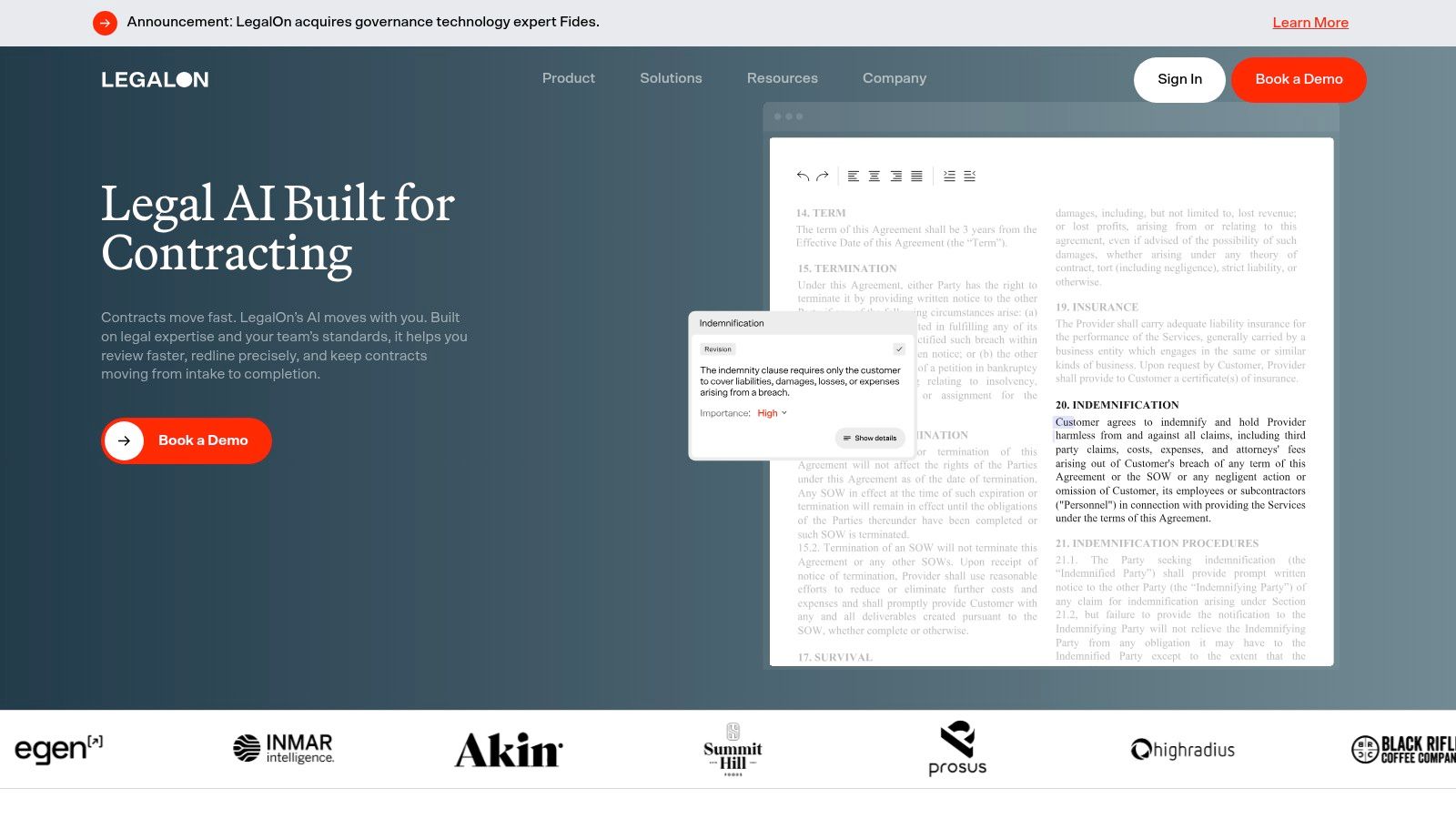
The platform stands out by grounding its AI suggestions in a library of expert legal content, ensuring that recommendations are practical and reliable without requiring extensive model training. This allows firms to achieve significant efficiency gains from day one, streamlining workflows for transactional and in-house teams alike.
Key Details & Use Cases
- Best For: Corporate legal teams, transactional attorneys, and law firms that handle a high volume of contract review and drafting.
- PI Use Case: A personal injury firm could use LegalOn to quickly review and revise retainer agreements, vendor contracts, or settlement agreements, ensuring all clauses are compliant and protect the firm’s interests.
- Pricing: Custom quote-based pricing, which requires engaging with their sales team for a demo. It is positioned for enterprise clients rather than self-service.
- Website: www.legalontech.com
Pros:
- Outputs are underpinned by high-quality legal guidance and attorney-authored content.
- "AI Revise" tool offers actionable, one-click solutions for identified contract risks.
- Fast implementation and value delivery with no heavy model training required.
Cons:
- Pricing is not transparent and requires a sales demonstration.
- Primarily designed for an enterprise sales motion, making it less accessible for solo practitioners.
8. Luminance
Luminance is a legal-grade AI platform designed to manage the entire contract lifecycle, from initial drafting and AI-assisted negotiation to large-scale review, due diligence, and portfolio analytics. It is built for both in-house legal teams and law firms that need sophisticated document intelligence and enterprise-grade security. This makes it one of the more comprehensive AI tools for lawyers handling complex transactional or litigation document sets.
The platform's strength lies in its ability to understand legal context and clauses across vast document repositories, offering unique insights and accelerating review processes. Its agentic contract drafting and redlining features, available via integrations like Microsoft Word, streamline negotiation workflows significantly.
Key Details & Use Cases
- Best For: Mid-to-large sized firms and corporate legal departments managing high volumes of contracts or complex due diligence and discovery projects.
- PI Use Case: While not its primary focus, a PI firm could use its Discovery module to rapidly analyze thousands of documents from a corporate defendant in a product liability case, identifying key terms, timelines, and potentially relevant communications far faster than manual review.
- Pricing: Enterprise-level and quote-based. Access requires engaging with their sales team for a demo and implementation plan.
- Website: www.luminance.com
Pros:
- Broad contract lifecycle coverage from drafting to analytics in one unified platform.
- Established in the market with a strong customer base and growing U.S. support.
- Enterprise security with ISO 27001 and SOC 2 compliance.
Cons:
- Pricing structure is not transparent and is geared toward larger organizations.
- Evaluation and onboarding are sales-driven and require a structured implementation process.
9. Ironclad
Ironclad is a leading contract lifecycle management (CLM) platform that integrates powerful generative AI features directly into its workflow. Its AI Assist tool helps legal teams accelerate drafting, redlining, and metadata extraction, positioning it as an ideal solution for organizations that need a comprehensive CLM system with robust, built-in AI capabilities. The platform's focus on a unified stack makes it one of the more streamlined AI tools for lawyers managing high-volume contracts.
What sets Ironclad apart is its custom AI functionality, allowing firms to train models on their own contract examples for highly specific clause detection and analysis. This approach to legal workflow automation ensures that the AI adapts to the firm's unique language and requirements, moving beyond generic templates. The platform also offers strong administrative controls for managing AI usage across an organization.
Key Details & Use Cases
- Best For: In-house legal teams and law firms that manage a high volume of contracts and need an all-in-one CLM and AI solution.
- PI Use Case: A personal injury firm can use Ironclad to standardize and accelerate the creation of attorney-client retainer agreements or settlement releases, using AI to extract key terms like settlement amounts and dates for reporting.
- Pricing: Quote-based; the modular product approach may require purchasing multiple components to access full functionality.
- Website: ironcladapp.com
Pros:
- Strong CLM and AI product roadmap with clear packaging.
- Admin controls for AI usage and enterprise deployment options.
- Ability to train custom AI models on firm-specific data.
Cons:
- Pricing requires a direct quote and CLM implementation is a significant effort.
- May be more complex than necessary for firms with simple contract needs.
10. Everlaw
Everlaw is a cloud-native eDiscovery and investigations platform that deeply integrates AI into the entire litigation workflow. Its Everlaw AI features, including generative AI review and writing assistants, are designed to accelerate document analysis and streamline case preparation. This platform stands out by pairing advanced AI with robust predictive coding, powerful analytics, and collaborative review tools, making it a comprehensive solution for modern litigation teams.
The platform’s transparent, data-based billing model provides clarity on costs, which is a significant advantage for firms managing large discovery projects. By offering core AI assistants within the main subscription and metered billing for batch actions, Everlaw provides a powerful and accessible entry point for firms looking to leverage sophisticated AI tools for lawyers. This approach helps teams utilize the platform like an artificial intelligence paralegal to handle high-volume tasks.
Key Details & Use Cases
- Best For: Litigation teams of all sizes seeking an end-to-end eDiscovery platform with transparent, usage-based AI pricing.
- PI Use Case: A paralegal managing discovery in a complex product liability case can use the AI Assistant to automatically identify and summarize all documents mentioning a specific product defect, dramatically speeding up the initial review phase.
- Pricing: Based on data volume, with generative AI features included in the subscription. Batch AI actions are metered and may incur additional costs.
- Website: www.everlaw.com/pricing
Pros:
- Transparent pricing with clear disclosures on included vs. metered AI features.
- Strong reputation and user satisfaction as a leader in the eDiscovery space.
- Integrated platform combining AI, analytics, and collaborative review.
Cons:
- Overall cost is tied to data volumes, which can be unpredictable.
- Extensive use of batch AI actions can lead to additional, usage-billed costs.
11. Relativity – RelativityOne with aiR
RelativityOne is an established enterprise eDiscovery platform that now integrates generative AI through its aiR modules. This addition targets large-scale document review and privilege work, allowing legal teams to leverage AI for summarizing complex documents, identifying privileged content, and accelerating review workflows directly within their existing eDiscovery environment.
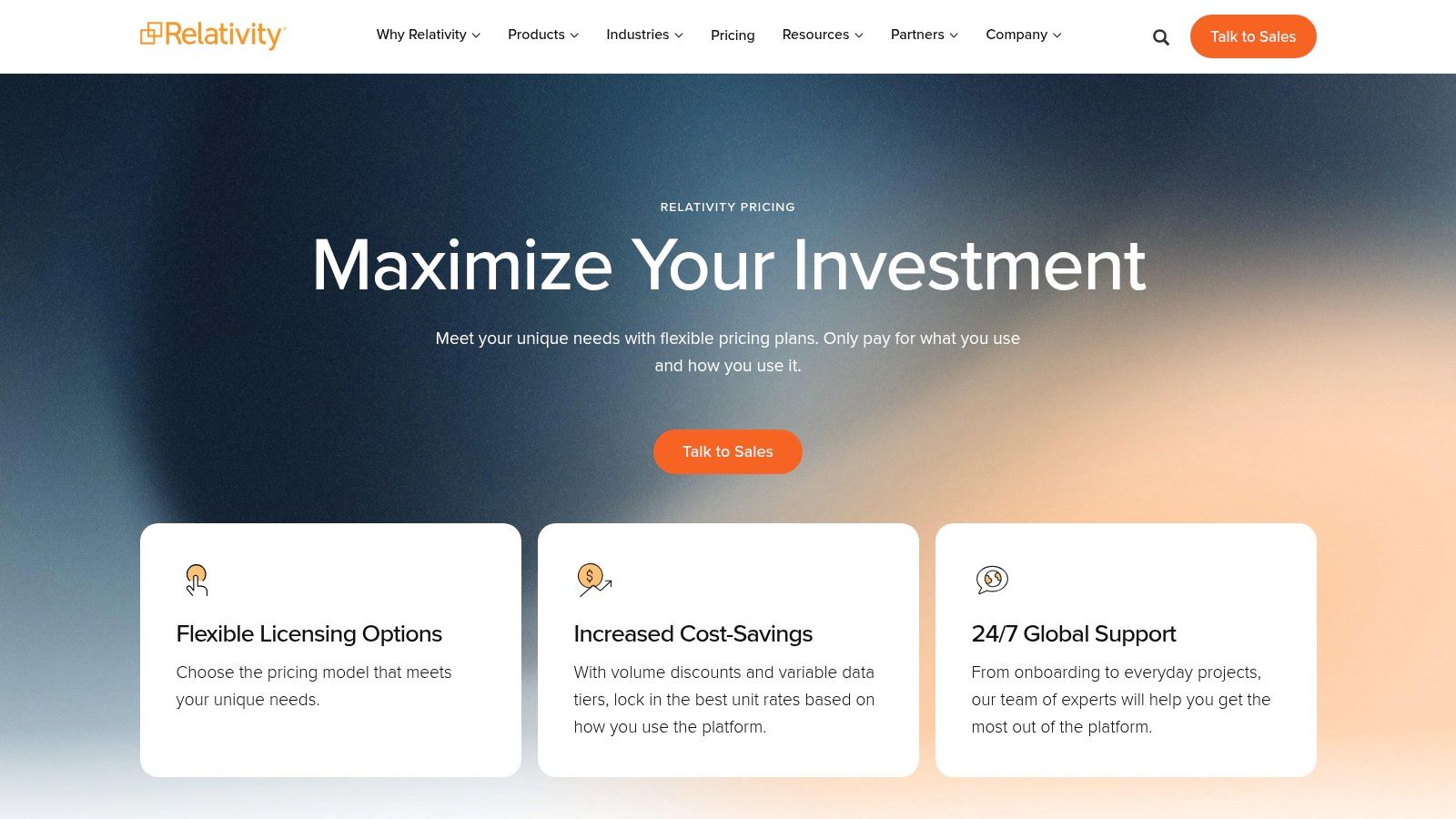
The platform stands out by offering modular AI add-ons, enabling firms to adopt generative AI capabilities without overhauling their entire process. For firms managing massive datasets in litigation, RelativityOne with aiR is one of the essential AI tools for lawyers, streamlining what was once a manually intensive and costly stage of discovery.
Key Details & Use Cases
- Best For: Large law firms and litigation support teams managing high-volume eDiscovery and document review projects.
- PI Use Case: In a multi-vehicle accident case with thousands of internal corporate documents, a paralegal can use aiR for Review to quickly summarize long engineering reports and identify potentially privileged communications between the defendant and its counsel.
- Pricing: Requires direct sales engagement; offers flexible models like pay-as-you-go or committed usage, with volume-based discounts available.
- Website: www.relativity.com/pricing
Pros:
- Established market leader in eDiscovery with a massive user base.
- Modular AI add-ons allow for targeted implementation.
- Offers 24/7 global support and flexible, enterprise-focused licensing.
Cons:
- Implementation can be complex and requires significant onboarding.
- Pricing is not transparent and is geared toward large-scale enterprise clients.
12. G2 – Legal Research category hub
While not a direct AI tool itself, G2 is an essential software marketplace and peer review hub for legal professionals evaluating technology. It serves as a critical starting point for discovering and vetting various AI tools for lawyers, offering comprehensive category pages for legal research, eDiscovery, and contract lifecycle management where real users share their experiences. This allows firms to compare features, pricing, and user satisfaction side-by-side.
G2 helps validate vendor claims by providing unfiltered feedback from legal practitioners. The platform’s detailed reviews and comparison grids enable firms to shortlist solutions that fit their specific needs and budget, cutting through marketing hype to find the most effective software for their practice.
Key Details & Use Cases
- Best For: Law firms of all sizes conducting due diligence on legal tech, comparing platforms, and verifying vendor reputation through user reviews.
- PI Use Case: A managing partner at a personal injury firm can use G2's filters to identify top-rated document review platforms used by other small to mid-sized law firms, reading reviews to gauge user satisfaction and ease of implementation.
- Pricing: Free to browse and compare software listings.
- Website: www.g2.com/categories/legal-research
Pros:
- Independent, user-review driven data provides authentic insights.
- Free to browse with powerful comparison tools and filters.
- Helps discover emerging and niche AI tools beyond the major players.
Cons:
- Not a direct vendor or tool; it is a marketplace for discovery.
- Some listings may be sponsored or feature promoted placements.
Top 12 AI Tools for Lawyers — Feature Comparison
| Product | Core focus | Key features | Target audience | Security & Compliance | Pricing & Unique strength |
|---|---|---|---|---|---|
| Ares | AI medical‑records review & demand drafting for personal injury | Drag‑and‑drop ingestion; extracts dates/diagnoses/treatments; auto medical overview & demand draft | Personal injury attorneys, paralegals, case managers — solos to high‑volume firms | HIPAA‑compliant; enterprise‑grade privacy & security controls | Demo / custom pricing; eliminates 10+ hrs/case; PI‑specific, demand‑ready outputs |
| Thomson Reuters – Westlaw Precision with CoCounsel | AI‑assisted legal research & drafting grounded in Westlaw authority | Linked citations; CoCounsel assistant; KeyCite editorial backbone | U.S. law firms, courts, enterprise legal teams | Enterprise controls and authoritative editorial sourcing | Quote‑based (premium); authoritative citations and deep editorial content |
| LexisNexis – Lexis+ AI | Conversational research, drafting & analysis over Lexis content | Conversational research, Protégé assistant, configurable models | Firms relying on Lexis secondary sources and practice guidance | Enterprise privacy, compliance posture and support | Quote‑based pricing; strong secondary sources and practice guidance |
| Bloomberg Law – Draft Analyzer & Clause Adviser | Transactional drafting, clause benchmarking and redlines | Clause favorability analysis; one‑click redlines; precedent benchmarking | Transactional/M&A lawyers and deal teams | Included within Bloomberg Law subscription ecosystem | Subscription included feature; strong M&A precedent datasets |
| Harvey | Enterprise legal AI for research, drafting, review and knowledge | Legal‑tuned assistant, secure deployments, “Vault” for data | Midsize to large law firms and in‑house legal teams | Secure deployment options (e.g., Azure); enterprise auditability | Enterprise sales; built for strict security and compliance needs |
| Spellbook | Contract drafting & redlining inside Microsoft Word | Word add‑in, Associate app for multi‑doc tasks, zero‑data‑retention option | Lawyers who work mainly in Word; contract teams | SOC 2 Type II, zero‑data‑retention option | 7‑day trial; fast time‑to‑value by working inside Word |
| LegalOn | AI contract review with inline revision (AI Revise) | One‑click risk spotting, practice notes, inline fixes | Contract reviewers, legal ops, in‑house counsel | Outputs underpinned by attorney‑authored guidance | Demo/sales pricing; attorney‑guided risk spotting and fixes |
| Luminance | Contract lifecycle AI: drafting, review, diligence & analytics | Agentic drafting/redlining, diligence modules, portfolio analytics | Law firms and enterprises managing contract portfolios | ISO 27001 / SOC 2 and enterprise integrations | Enterprise/quote pricing; broad lifecycle coverage in one platform |
| Ironclad | CLM platform with generative AI features | AI Assist for drafting/redlines, custom AI properties, integrations | Organizations needing CLM + AI (legal ops, procurement) | Robust admin controls, enterprise deployment options | Quote‑based; CLM + AI product roadmap and integrations |
| Everlaw | Cloud eDiscovery & investigations with integrated AI | Generative review assistants, predictive coding, analytics | eDiscovery teams, litigation support groups | Transparent disclosures; data‑based billing for AI actions | Transparent metered pricing; clear AI inclusion vs. usage billing |
| Relativity – RelativityOne with aiR | Enterprise eDiscovery with modular AI add‑ons | aiR for Review/Privilege, flexible licensing models | Large enterprises, eDiscovery vendors, law firms with high volumes | 24/7 global support; enterprise security and compliance | Modular pricing; volume discounts, implementation‑driven rollout |
| G2 – Legal Research category hub | Marketplace for vendor comparisons & peer reviews | Category grids, filters, user ratings, vendor links | Buyers researching legal‑AI tools and procurement teams | Independent user reviews (marketplace platform) | Free to browse; user‑review driven shortlisting and validation |
The Future is Now: Building a More Efficient and Effective Practice
The legal landscape is undergoing a profound transformation, and the adoption of artificial intelligence is no longer a futuristic concept but a present-day imperative for competitive law firms. The array of AI tools for lawyers we've explored, from comprehensive legal research platforms like Westlaw Precision and Lexis+ AI to specialized document review and drafting assistants like Luminance and Spellbook, demonstrates that this technology offers tangible solutions to the industry's most pressing challenges. By automating tedious tasks and providing data-driven insights, these tools empower legal professionals to focus on strategic, high-value work that directly impacts client outcomes.
For personal injury firms, in particular, the gains are not merely incremental; they are revolutionary. The ability to automate the review of thousands of pages of medical records with a tool like Ares, or to accelerate deposition summaries and discovery requests, frees up invaluable attorney and paralegal time. This shift allows firms to handle larger caseloads more effectively, build stronger cases founded on meticulously analyzed evidence, and ultimately, secure better results for their clients. The future of litigation isn't about replacing lawyers; it's about augmenting their expertise with powerful, intelligent systems.
Charting Your Firm's AI Implementation Strategy
Embarking on this technological journey can feel daunting, but a strategic approach makes it manageable. The key is not to adopt AI for its own sake but to solve specific, well-defined problems within your practice.
Your Actionable Next Steps:
- Identify Your Biggest Bottleneck: Where does your team spend the most non-billable time? Is it in document review, legal research, or drafting routine communications? Pinpointing your primary pain point will immediately narrow your focus to the most impactful category of AI tools.
- Start Small and Scale: You don't need a firm-wide overhaul overnight. Select one critical process, such as medical record summarization or initial contract review, and pilot a specialized tool. Measure the return on investment in terms of time saved and improved work quality before expanding to other departments.
- Prioritize Security and Compliance: As we've discussed, data security and client confidentiality are non-negotiable. Scrutinize each potential vendor’s security protocols, data handling policies, and compliance certifications (like HIPAA and SOC 2) to ensure they meet your firm's rigorous ethical and regulatory standards.
- Invest in Training and Integration: The most powerful tool is useless if your team doesn't know how to use it. Choose solutions with strong customer support and training resources. Plan for a phased rollout and dedicate time to helping your staff integrate the new AI tools into their existing workflows.
Final Thoughts: From Adoption to Advantage
The strategic integration of AI tools for lawyers is rapidly becoming the defining characteristic of a modern, resilient, and client-centric law firm. By embracing these technologies, you are not just optimizing workflows; you are fundamentally enhancing your firm's capacity to deliver exceptional legal services. The journey begins with a single, informed step toward solving a known problem. Embrace this opportunity to build a faster, smarter, and more effective practice that is equipped for the challenges and opportunities of tomorrow. For a detailed breakdown of specific platforms and their capabilities, including an outlook for the future, refer to this guide on the 12 Best AI Tools for Lawyers to Use in 2025.
Ready to eliminate the biggest bottleneck in your personal injury practice? Ares is the AI-powered medical records chronology and summarization tool built specifically for litigators. See how you can save hundreds of hours per case by visiting Ares to schedule a demo.