An injured driver is sitting at the kitchen table, scrolling on a phone between medical appointments. The collision happened days ago. There's an insurer's voicemail to return, a missed shift to explain, and a growing pile of paperwork. A familiar lawyer's name appears on the screen, but recognition alone won't settle the next question: is this the right firm to call?
Your next car accident lawyer commercial competes at that moment. The viewer isn't evaluating production quality the way your marketing team does. They're deciding whether you understand their problem, whether they believe you, and whether contacting your office will help.
The useful lessons come from distinct formats: Morgan & Morgan's consistent branding, Jacoby & Meyers' regional repetition, emotional storytelling, contingency-fee messaging, direct-response prompts, and client testimonials. Digital video adds another application, carrying those techniques onto the phone where the search continues.
For a personal injury firm, the practical test is straightforward: does the commercial help the right prospective client take an informed next step? Each format offers a different way to earn that call, along with a different operational or compliance risk.
1. Morgan & Morgan "For The People" Campaign
Morgan & Morgan's “For The People” positioning illustrates the value of a recognizable verbal identity. The transferable lesson isn't to imitate a national firm's media footprint. It's to stop changing your message before prospective clients can recognize it.

Noticing starts with consistency. The same firm name, visual treatment, and positioning across a billboard, television spot, and landing page make it easier for someone to connect separate encounters. Trusting requires more: the ad must explain whose problems the firm handles rather than relying on a slogan alone.
The competitive context matters. Claims Journal reported approximately $1.2 billion in U.S. television advertising spending by lawyers and other legal-service solicitors in 2023, illustrating how crowded the category is.
Replicate recognition, not scale
Say your firm serves injured drivers in a defined local market. Keep the same positioning across broadcast, outdoor, and your accident landing page, while adapting the supporting message to each placement.
- Noticing: Use a readable firm name and a consistent visual identity.
- Trusting: State the practice focus and describe what your team does.
- Calling: Give a clear contact route that matches the destination page.
A coordinated law firm commercial should feel like the same firm at every touchpoint. Don't let an empathetic television spot lead to a landing page dominated by aggressive, unsupported claims.
Replicable tactic: Write a short brand message sheet, then require every creative vendor to use its approved positioning, practice description, and contact language.
2. Jacoby & Meyers High-Frequency Regional TV Ads
Regional repetition works only when the region matches your practice. Jacoby & Meyers' regional television approach offers a useful model for firms seeking local familiarity rather than broad national recognition.
A viewer may notice the name during ordinary television viewing, recognize it later while researching an accident, and call when the service description matches their situation. That sequence makes geographic fit and message consistency more important than producing a constantly changing collection of commercials.

Consider a firm buying regional television coverage that extends beyond its intended service area. More calls may look encouraging, but intake staff must spend time screening inquiries the firm can't accept. Buy against your actual case geography, not just an attractive audience package.
Make familiarity useful at intake
Noticing comes from repeated exposure to a stable message. Trusting comes from accurate local relevance, such as a truthful service-area statement, not stock footage that implies an office presence you don't have. Calling depends on making the next step easy and explaining who will answer.
Buying rule: Don't pay to become familiar to viewers your intake team will routinely turn away.
Use channel-specific tracking numbers that route into the same intake process. Keep each number readable and connect the call record to consultation and retainer outcomes, not merely a call-count dashboard.
The trade-off in TV advertising for lawyers is between enough repetition to establish recognition and enough operational discipline to handle the response. A smaller, relevant audience can be more useful than broader exposure.
Replicable tactic: Compare your media coverage map with your accepted-case geography before approving the buy, then classify incoming calls by location and eligibility.
3. Emotional Crash-Aftermath Storytelling Spots
A driver reviewing medical paperwork can communicate more than a spectacular collision sequence. The paperwork shows a problem the viewer recognizes without forcing them through another frightening crash depiction.
The embedded example offers a reference point for discussing this storytelling format.
In this format, noticing comes from a recognizable situation: missed work, unanswered questions, or an adjuster's call. Trusting begins when the commercial accurately explains the lawyer's role. Calling becomes easier when the viewer knows the initial conversation will address their circumstances rather than deliver an instant settlement estimate.
Show help without promising relief
Say the opening scene shows a driver sorting bills at home. Instead of cutting to a settlement check, show the transition to a consultation and document review. Explain that the firm evaluates the collision, treatment, available evidence, and potential claim.
The creative trade-off is important: dramatic realism can attract attention while creating misleading impressions. The Florida Bar's advertising handbook explains that accident re-creations may need a clear, conspicuous disclaimer when viewers could mistake them for actual matters handled by the firm, and it restricts unduly manipulative or intrusive imagery and audio.
Don't treat an actor label as a universal cure. Review the scene's overall impression, the narration, and the relationship between the dramatization and any result claims. Check the applicable jurisdiction before production, when changes are still inexpensive.
Replicable tactic: Storyboard a recognizable post-crash task, show the firm's concrete response, and reserve readable screen space for any required dramatization disclosure before filming.
4. "No Fee Unless We Win" Contingency Messaging
Fee messaging answers an affordability question, not a case-value question. Someone who's missing work may hesitate to contact counsel because they assume the consultation or representation requires money they don't have available.

The phrase “no fee unless we win” draws attention by addressing that hesitation. It builds trust only if the viewer understands what fee means and what happens with case expenses. Don't imply that every financial obligation disappears if your engagement terms say otherwise.
The legal foundation favors accurate information, not unrestricted promises. In Bates v. State Bar of Arizona, the Supreme Court protected truthful, nonmisleading legal-service advertising while preserving states' authority to regulate deceptive or misleading claims.
Keep the ad and agreement aligned
For a firm using contingency representation, the commercial should communicate the arrangement in language consistent with its actual agreement. Intake staff should then explain the fee calculation, expense treatment, and circumstances under which obligations arise.
- Noticing: Address the concern about paying for legal help.
- Trusting: Distinguish attorney fees from expenses without burying the qualification.
- Calling: Explain what the initial conversation involves and whether it carries a charge.
Avoid letting the affordability message suggest that the firm accepts every case. A prospective client still needs a realistic understanding of evaluation and engagement.
Fee-copy test: If intake staff must immediately undo the financial impression created by the commercial, revise the commercial.
Replicable tactic: Have the lawyer responsible for engagement terms review the spoken promise, on-screen qualification, landing page, and intake explanation together, using the actual fee agreement as the reference.
5. Phone-Number-Driven Direct Response Ads
Start with the response path: can a viewer remember what to do, reach your office, and receive a useful answer? A memorable phone number is valuable only when the experience after dialing supports the promise in the ad.
A phone-number-driven car accident lawyer commercial strips away competing messages. Noticing comes from the contact prompt and repetition. Trusting still requires a recognizable firm and accurate service description. Calling should lead to a prepared intake team, not an unexplained transfer chain.
Build the call experience before the spot
Say a local television ad runs while your office has limited answering capacity. The campaign may generate interest, but a voicemail queue gives injured callers another reason to contact competing counsel. Arrange coverage before increasing exposure.
Under the ABA Model Rules framework for lawyer advertising, public advertising remains subject to restrictions on false or misleading communications, and communications must identify the responsible lawyer or firm and provide contact information. A catchy number doesn't replace those responsibilities.
For attribution, connect the tracking number to the creative version and placement, then carry that information into the intake record. Ask staff to distinguish a missed call from a duplicate inquiry, an unsuitable matter, and a qualified consultation.
- Before launch: Test routing, voicemail, transfers, and mobile click-to-call behavior.
- During response periods: Monitor unanswered inquiries and callback ownership.
- After intake: Connect the original placement to the eventual engagement decision.
Don't crowd the closing frame with competing destinations. Prioritize the action you want while keeping the firm identity clear.
Replicable tactic: Place a test inquiry through every advertised contact route and require a named staff member to own each handoff before the commercial airs.
6. Testimonial-Based Client Story Ads
The strongest testimonial isn't necessarily the one with the largest recovery. A client explaining that someone returned their calls, organized confusing paperwork, or explained the next step can answer a more immediate concern: will this firm help me understand what's happening?
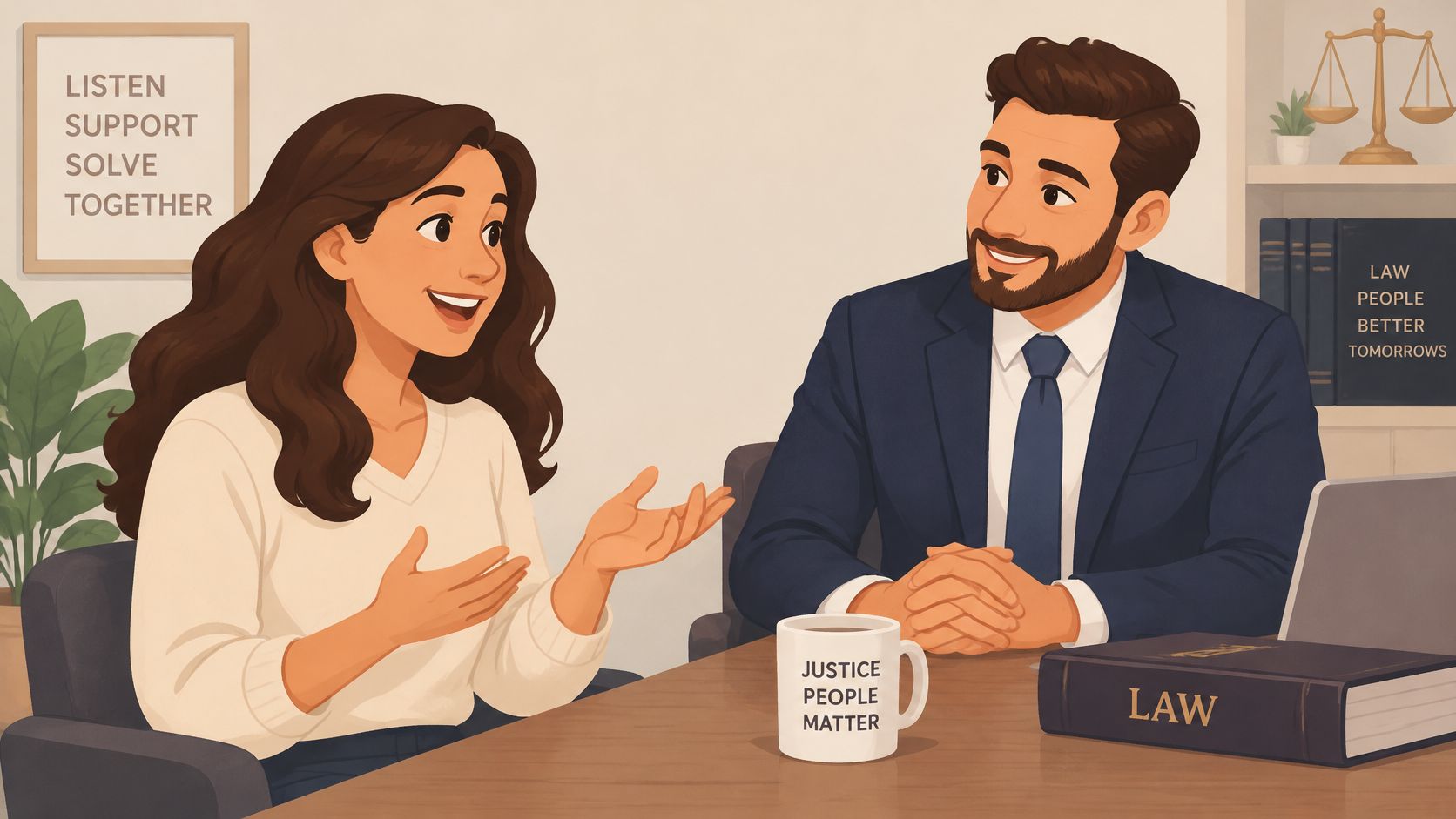
Noticing comes from hearing a recognizable problem in another person's voice. Trusting depends on authenticity and context. Calling follows when the viewer understands the service experience without assuming they'll receive the same result.
Ask about service, not a promised outcome
Consider a client describing how the firm helped assemble treatment records after a collision. Ask open questions about communication and process rather than feeding the client praise to repeat. Keep the edit faithful to the meaning of the original account.
Obtain written permission covering the story, image, voice, and intended distribution. Review confidentiality concerns and applicable testimonial requirements before publication, including any necessary actor, prior-result, or outcome qualifications.
A disclaimer shouldn't be asked to repair a story that otherwise implies a guaranteed recovery.
If you create testimonial videos from reviews, preserve the distinction between the reviewer's actual words and your presentation. Don't make an avatar, actor, or synthetic voice appear to be an actual client speaking without appropriate disclosure and review.
Keep consent documentation, the original account, and the approved edit together. If the campaign changes materially, revisit whether the existing permission covers the new use.
Replicable tactic: Build the testimonial around a specific service moment, verify it against the client's account, and obtain approval for the final presentation before distribution.
7. Digital and Retargeted Video Ads for Car Accident Victims
A website visitor who leaves without contacting your firm hasn't necessarily rejected it. They may be comparing counsel, waiting for an appointment, or trying to understand whether their situation warrants legal help.
Digital video can answer that unresolved question. Noticing depends on a useful opening that makes sense on a phone. Trusting requires consistency between the video and landing page. Calling or submitting an inquiry should take little effort without demanding a detailed medical history through an initial advertising form.
Answer the question that stopped the inquiry
Say someone visits your accident page but doesn't contact the office. A follow-up creative concept could explain what to prepare for a consultation: the collision details, available insurance information, and treatment history. It should offer useful guidance without claiming knowledge of the viewer's injury.
Retargeting deserves a separate privacy and platform-policy review. Don't assume a website visit gives you unrestricted permission to build sensitive audience categories, and don't send case descriptions or medical information through advertising pixels.
A practical personal injury marketing strategy connects the ad's question to a matching page. A video about consultation preparation shouldn't send the viewer to a generic homepage.
- Creative: Make the message understandable with captions and without sound.
- Destination: Use a fast, mobile-friendly page with clear contact options.
- Measurement: Compare qualified consultations and retained matters, not video views alone.
The trade-off is relevance versus intrusiveness. Helpful explanation can support a decision; language implying that you know someone was injured can undermine trust.
Replicable tactic: Produce a question-led video with different editing lengths, send each version to the same relevant landing page, and compare intake quality while keeping audience and spending conditions comparable.
How the six car accident lawyer commercial formats differ by channel, message, and risk
| Item | Primary Channel | Core Message | Main Compliance Risk |
|---|---|---|---|
| Morgan & Morgan "For The People" Campaign | Television, radio, and billboards | Consistent branding presents the firm as an advocate for ordinary people | State advertising rules vary and require review |
| Jacoby & Meyers High-Frequency Regional TV Ads | Regional television | Repeated exposure makes the firm memorable to local accident victims | Frequent ads may cause viewer fatigue |
| Emotional Crash-Aftermath Storytelling Spots | Television and video ads | A lawyer handles claim burdens so clients can focus on recovery | Dramatizations must not mislead or imply guaranteed results |
| "No Fee Unless We Win" Contingency Messaging | Television and other personal injury ads | Clients pay no fee upfront and owe a fee only if the firm recovers compensation | Fee and expense terms must be accurately disclosed |
| Phone-Number-Driven Direct Response Ads | Radio, local television, and online video | A memorable number prompts immediate contact | A limited message may omit important context |
| Testimonial-Based Client Story Ads | Television and video ads | Client stories build trust through first-person accounts | Testimonials must be genuine; outcome claims may need disclaimers |
| Digital and Retargeted Video Ads for Car Accident Victims | Online video and social media | Targeted ads reach people researching accident representation | Privacy rules limit targeting and use of behavioral data |
Turning Ad Lessons Into Intake You Can Actually Handle
Every format asks the viewer to move through the same decisions: notice the firm, believe its message, and make contact. Broadcast repetition, client stories, fee explanations, and digital follow-up address different barriers along that path.
Advertising performance doesn't end when the phone rings. Your firm still needs to answer, identify suitable matters, explain engagement accurately, and organize the evidence needed for attorney review. Increasing inquiry volume before fixing those steps can leave staff busier without producing a healthier practice.
Connect the creative to the case workflow
Start with a controlled comparison rather than a complete campaign overhaul. The ABA's lawyer-advertising ethics white paper provides context for aligning public-facing messages with legal-service needs; evaluate your own creative through intake outcomes rather than claiming a universal conversion benchmark.
Keep media conditions and response coverage comparable when testing a revised message. Track answered inquiries, qualified consultations, signed engagements, acquisition cost, and reasons for rejection. A cheaper call isn't necessarily a better prospective case.
- Connect channel tracking: Carry campaign identifiers from the initial inquiry into the retained matter.
- Align fee disclosures: Make the commercial, landing page, intake explanation, and agreement consistent.
- Document testimonial consent: Retain permissions and review edits for misleading implications.
- Assign evidence ownership: Identify who requests records, checks missing documents, and prepares the file for review.
The effort to turn injury leads into retained clients should preserve informed client choice, not pressure people into engagement. Give callers a clear explanation of what your firm can evaluate and what remains uncertain.
We cover the document-heavy work of a personal injury case from intake to settlement, including medical record summarization and evidence-based demand drafting. That supports the operational side of advertising growth, while your attorneys remain responsible for legal decisions and reviewing work product.
Choose the format that answers your prospective clients' most important unresolved question. Then make sure the team receiving those inquiries can deliver the clarity your commercial promises.
Ares offers medical record summarization and demand drafting for personal injury firms handling ad-driven intake. Visit Ares to explore how our platform organizes case records into cited summaries and demand drafts, helping your team prepare growing caseloads for attorney review.