

Your intake specialist is the most important first impression your law firm will ever make. They are the frontline, the first voice a potential client hears, and they have a direct line to your firm's profitability. Think of them less as call-takers and more as the gatekeepers who turn an inquiry into a signed case.
For any modern personal injury firm serious about growth, this role isn't just helpful—it's essential.
Defining the Modern Intake Specialist Role

The days of an intake specialist simply performing administrative tasks are long gone. In today's crowded legal market, this position has become a core strategic asset. Their real job is to build a seamless, empathetic, and professional bridge between a person in crisis and the legal help you offer.
That very first interaction is a make-or-break moment. It often determines whether a high-value case is signed with you or lost to a competitor before an attorney even sees the file.
A great specialist owns the entire pre-client journey. They don't just answer the phone; they actively listen to a caller's story, quickly pull out the critical facts, and decide if the case is a good fit for your firm's practice areas. This requires a unique blend of compassion, sharp analytical thinking, and a bit of salesmanship.
Core Responsibilities and Daily Functions
What does an intake specialist actually do all day? Their work is a dynamic mix of tasks that keep the client onboarding process moving smoothly and efficiently. Understanding these functions makes it clear why the role is so central to your firm's operations.
Here’s what a typical day looks like:
- Initial Client Contact: Being that first human touchpoint via phone, email, or web chat, immediately setting a positive and professional tone.
- Lead Qualification: Using your firm's criteria to vet potential cases, screening out non-viable leads so attorneys can focus only on the ones that matter.
- Data Collection and Entry: Methodically gathering and documenting every essential detail—incident dates, injuries, parties involved—and entering it accurately into your firm’s CRM.
- Scheduling and Coordination: Setting up initial consultations between qualified leads and your legal team, expertly managing calendars to prevent conflicts.
- Empathetic Communication: Providing genuine reassurance to people who are often scared, hurt, and confused. This is how trust is built from minute one.
The demand for people who can do this well is skyrocketing. Job growth for intake specialists is projected at 12%, which is significantly faster than the average for most occupations. This surge shows just how many firms are waking up to the need for a specialized, efficient client onboarding process. You can find more data on intake specialist job trends to get a sense of the hiring landscape.
At its core, the intake specialist role is about converting a moment of crisis into a relationship of trust. They are the guardians of your firm's reputation and the engine of its growth, one conversation at a time.
The Skills That Define an Elite Specialist
Let's be clear: not all intake specialists are created equal. Many can handle the basic tasks, but an elite specialist possesses a specific mix of hard and soft skills that directly boosts your lead-to-client conversion rate.
They must be masters of active listening—showing real empathy while steering the conversation to get the facts you need. Rock-solid organizational skills are completely non-negotiable; they’re juggling multiple inquiries at once and can't afford to let a single detail slip through the cracks.
Finally, they need to be tech-savvy enough to fly through your law firm's CRM software, scheduling tools, and chat platforms without a hitch. It’s this blend of human touch and technical skill that transforms the role from a simple job into a powerful asset for your firm.
Hiring and Onboarding Your Intake Team
https://www.youtube.com/embed/K3LIV3B1vOg
Getting the right person in the intake specialist seat is probably the single most important decision you'll make when building out this part of your firm. This isn’t just another administrative hire; this person is the foundation of your entire client acquisition process.
You have to be meticulous here. A rushed hire or a disorganized onboarding will cost you far more than just a salary—it will cost you valuable cases. The goal isn't to just fill a seat. It's to find that unique individual who blends genuine compassion with a sharp eye for detail and the resilience to handle emotionally charged conversations day in and day out. This means looking past the resume to see if a candidate can truly connect with people at their most vulnerable.
Crafting the Ideal Job Description
Think of your job description as your first filter. A great one attracts the right people and politely shows the wrong ones the door. It needs to be crystal clear about the human side of the role, not just the list of tasks. If you post a vague description, you'll get a flood of generic applicants, and you'll waste hours sifting through them.
Don't just say they'll "answer phones." That tells them nothing. Frame it around the impact they'll have.
- Weak: "Responsible for answering inbound calls and emails."
- Strong: "Serve as the compassionate first point of contact for individuals seeking legal help, guiding them through our intake process with empathy and professionalism."
Be specific about the core skills you need, like active listening, proficiency with your CRM, and the ability to stay cool under pressure. This level of detail ensures that the candidates who do apply already have a good sense of the high expectations of an intake specialist law firm environment.
Asking the Right Interview Questions
Once you have a shortlist of promising candidates, the interview is where you separate the good from the great. Forget the standard, predictable questions. You need to put them in realistic situations to see how they actually think and react.
Try asking questions that reveal character and capability:
- "Describe a time you had to deliver difficult news to someone. How did you handle their reaction?"
- "A potential client calls in a panic, giving you scattered, emotional details about their accident. Walk me through exactly how you would manage that call to get the key information while also keeping them calm."
- "Picture this: you have three urgent web leads that just came in, the phone is ringing, and an attorney just sent a follow-up email that needs a quick response. How do you prioritize?"
These kinds of questions push candidates beyond their rehearsed answers. They force them to show you their problem-solving skills, emotional intelligence, and ability to juggle competing priorities—all non-negotiable traits for a top-tier intake specialist. For firms looking to scale their team with remote talent, checking out lists of the best offshore virtual assistant companies can be a great way to source qualified people from a wider pool.
Structuring a 90-Day Onboarding Plan
Hiring the perfect person is only half the battle. A structured, thoughtful onboarding plan is what truly sets them up for success and keeps them at your firm long-term. A solid 90-day plan makes your new hire feel supported and helps them become a productive member of the team much faster.
A well-executed onboarding process is your firm’s commitment to a new hire’s success. It transforms a promising candidate into a confident, high-performing specialist who understands their critical role in the firm's mission.
Break the plan down into manageable phases so they aren't overwhelmed.
| Onboarding Phase | Key Objectives |
|---|---|
| First Week | Get them comfortable with the firm's culture, people, and tools. They should master the phone system and have a basic feel for the CRM. |
| First 30 Days | Time for a deep dive into your firm's specific practice areas, intake scripts, and the detailed criteria for qualifying a case. |
| First 90 Days | They should be handling live calls (with supervision), starting to hit their initial KPIs, and getting regular, constructive feedback. |
This phased approach ensures your new intake specialist learns everything from the nuances of your legal software to your firm's specific way of communicating.
When you're budgeting, remember this is a pivotal role. The compensation should reflect that. The average annual salary for a legal intake specialist in the U.S. typically falls between $40,000 to $50,000, with experienced specialists commanding more. It’s a competitive field—the global legal staffing market is a massive $1.6 billion industry—so investing in the right talent from the start is crucial.
Building a World-Class Intake Training Program
You can't just hire a great intake specialist; you have to build one. Handing someone a headset and a CRM login without proper training is just setting them (and your firm) up for failure. A serious training program isn't an expense—it's an investment that shows up directly in your conversion rates, client reviews, and the quality of cases you sign.
The whole point is to move beyond just teaching phone manners. A truly effective curriculum will give your team a solid grasp of your firm’s practice areas, sophisticated communication skills, and a deep understanding of your tech stack. This isn't a one-and-done onboarding task; it's about creating a culture where skills are constantly being refined.
Module 1: Legal Fundamentals for the Front Lines
No, your intake team doesn't need a J.D. But they absolutely need to understand the basic legal principles that drive your firm's work. When an intake specialist law firm overlooks this, they're essentially asking their team to fly blind. They won't know how to ask the right follow-up questions or spot the tell-tale signs of a high-value case.
This module is all about translating legalese into plain English.
- Statute of Limitations: You need to explain what this is, why it's a hard deadline, and how to ask about incident dates without making the caller panic.
- The Basics of Negligence: Break down duty, breach, causation, and damages in a simple way. The goal is for them to hear these elements as a potential client tells their story.
- Your Firm's Core Cases: Give them a rundown of the cases you see most often, like car wrecks or slip and falls, and explain the critical facts needed for each one.
You’re not trying to turn them into paralegals. You’re giving them the confidence to steer conversations, gather the exact information your attorneys need, and make a strong first impression.
Module 2: Real-World Empathy and Calming Tough Conversations
Let's be honest: people are often calling you on one of the worst days of their lives. They’re scared, in pain, angry, or grieving. Your intake specialist has to be that calm, confident voice that can build immediate trust.
This training needs to be more than just a memo about "being nice." It requires hands-on, scenario-based role-playing.
A well-trained intake specialist acts as a 'first responder' for a client's emotional and legal crisis. They don't just collect data; they absorb stress, offer genuine reassurance, and make the caller feel heard and protected.
Develop scripts and practice exercises for the calls you know are coming:
- The Panicked Caller: Work on active listening and using phrases that show you're on their side and can help de-escalate their anxiety.
- The Demanding Caller: Give your team the tools to stay in control of the call politely but firmly, without coming across as dismissive.
- Turning Down a Case Gracefully: Arm them with clear, respectful language to decline a case that isn't a fit, so the person still walks away with a positive impression of your firm.
Module 3: Mastering Your Firm's Technology
Clumsiness with technology is a direct hit to your bottom line. Every moment an intake specialist spends wrestling with software is a moment they could have spent talking to a new client. This module is about making them fast and accurate with every tool they use.
Your training needs to cover every single piece of software in their workflow.
- CRM Expertise: Go way beyond just typing in names and numbers. Show them how to use tags, set automated reminders for follow-ups, and pull basic reports to track their own performance.
- Phone System Pro-Tips: Make sure they can flawlessly transfer a call, professionally place someone on hold, and handle the voicemail system without a hitch.
- Document Management: Handling sensitive client information requires strict protocols. Our guide on HIPAA compliant document management is a great resource for instilling best practices and understanding the importance of security.
When you invest in this level of training, your intake team stops being an administrative cost center. They become a strategic engine for growth.
Crafting a Client Intake Workflow That Actually Works
If your intake process feels chaotic, it's not just stressing out your team—it's actively costing you cases. Every missed call, delayed email, or fumbled follow-up is a potential high-value client walking out the virtual door and into the arms of your competition. The only way to stop the bleeding is to build a standardized, repeatable system that gives every single lead the same professional, white-glove experience.
This isn’t about creating rigid, soulless scripts. It's about designing a clear, logical path that takes a potential client from their first phone call to a signed retainer. When you remove the guesswork, you empower your intake team to act with confidence and efficiency, ensuring no one ever feels ignored or falls through the cracks.
A truly effective intake system is built on a foundation of solid training that balances legal know-how, genuine empathy, and technical skill.
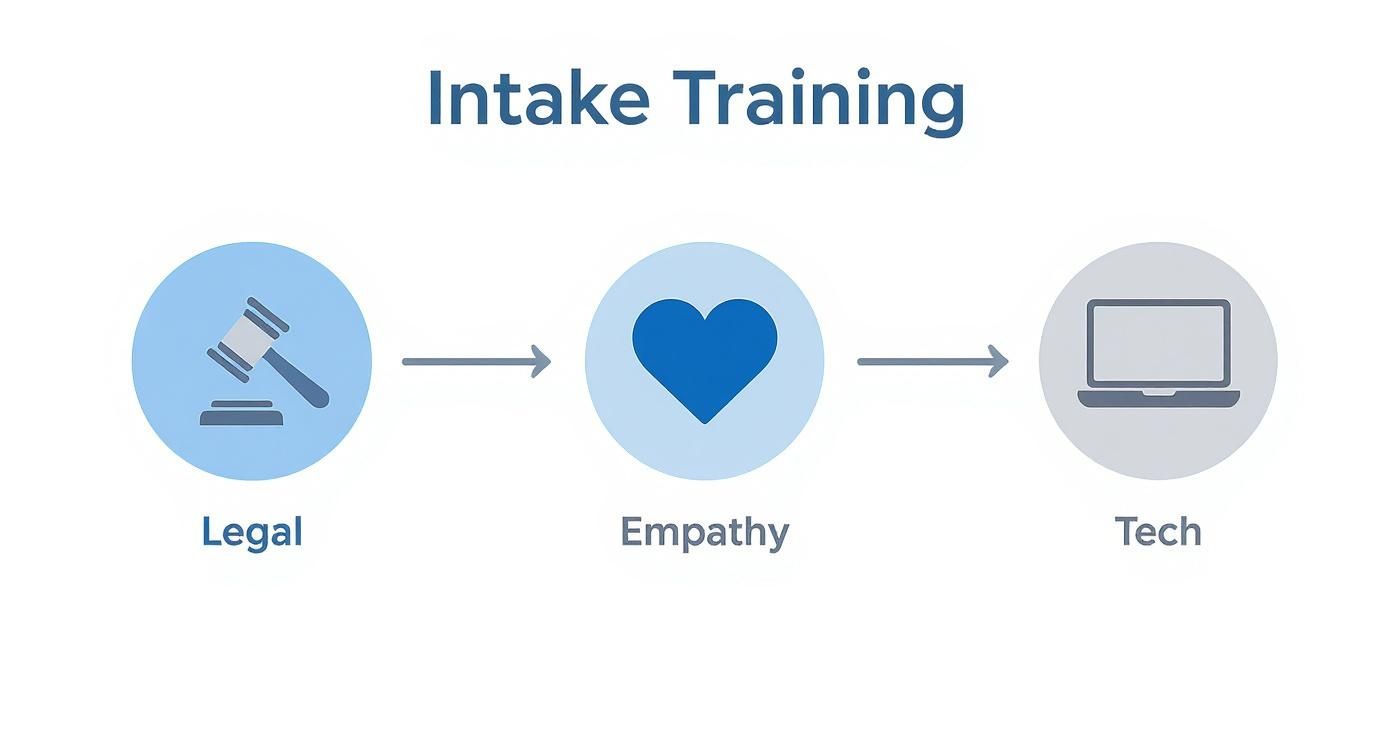
As this shows, it's the harmony between these three pillars—legal, human, and tech—that equips your specialists to master the demands of the role.
Mapping the Client Onboarding Journey
A world-class workflow isn't just a list of tasks; it's a detailed map of every touchpoint, complete with clear ownership and timelines. The journey starts the instant a lead comes in and only ends when they are officially a client of the firm. Each stage is deliberately designed to move the person forward with clarity and confidence.
Your firm's workflow absolutely must include these core stages:
- Initial Contact: The clock starts ticking the moment a web form hits your inbox or the phone rings. Speed and acknowledgment are everything here.
- Fact-Finding: The specialist gathers the essential case details using a standardized intake form or a well-structured script.
- Conflict Check: This is a non-negotiable step. Running a conflict check early prevents serious ethical headaches down the road.
- Attorney Review: The intake specialist neatly summarizes the information for an attorney to make a quick, informed decision on the case's viability.
- Communicate & Schedule: The specialist clearly communicates the firm's decision. If it's a yes, they schedule the consultation. If it's a no, they provide a respectful declination.
- Retainer & Onboarding: For accepted cases, the specialist sends out the retainer agreement and guides the new client through the signing process.
Think of your workflow as your firm's promise. It shows potential clients that you are organized, professional, and that you value their time. This builds a foundation of trust long before you ever file a single legal document.
To see the difference a structured process makes, let's compare a typical, manual approach with an optimized, tech-enabled workflow.
Intake Workflow Stage Comparison
| Workflow Stage | Manual Approach (Common Pitfalls) | Optimized Approach (Best Practices) |
|---|---|---|
| Initial Contact | Delayed responses (hours/days). Voicemails go to a general inbox. No one is assigned ownership. | Immediate, automated acknowledgment. The "5-Minute Rule" for all web leads. Dedicated specialist responds personally. |
| Information Gathering | Inconsistent questions asked. Key details are missed. Notes are handwritten or scattered in emails. | Standardized digital intake form ensures all critical data is captured. Information flows directly into the CRM. |
| Attorney Review | Attorney is handed a messy pile of notes. Decision-making is slow and requires multiple follow-ups. | A clean, one-page case summary is automatically generated for the attorney. Review and decision happen within a set timeframe. |
| Follow-Up | Relies on manual reminders. Follow-ups are sporadic or forgotten entirely. Lead goes cold. | Automated follow-up sequences (email/SMS) are triggered if a lead doesn't respond. Tasks are auto-assigned to the specialist. |
| Contract & Retainer | Paper contracts are mailed or emailed. The signing process is slow, cumbersome, and requires printing/scanning. | E-signature links are sent instantly. Automated reminders are sent until the retainer is signed. The process is tracked in the CRM. |
The optimized approach not only saves an incredible amount of time but also delivers a far more professional and reassuring experience for the potential client.
Fueling Your Workflow With Automation
Trying to manage this process manually with spreadsheets and sticky notes is a recipe for failure. This is where the right technology becomes your most valuable player. A good CRM and automation tools can turn your static workflow map into a living, breathing system.
You can set up automated triggers that send follow-up emails, schedule appointment reminders, and assign tasks to team members as a case progresses. For firms ready to take the next step, exploring the capabilities of legal workflow automation software is the key to building a truly scalable and efficient intake machine. This frees up your intake specialists to do what they do best: building rapport and connecting with people who need your help.
Choosing Your Intake Technology Stack

Let's be blunt: your intake department is only as good as the tools you give it. Without the right tech, even the best intake specialist will get bogged down by inefficiencies, data entry errors, and missed opportunities. The right technology stack transforms intake from a simple administrative task into a growth engine for your entire firm.
This isn't about buying the newest, shiniest gadget. It's about a strategic investment in integrated tools that automate the mundane, speed up response times, and deliver the data you need to make smarter business decisions. When your tech works, your people can focus on what actually matters: connecting with potential clients.
The Cornerstone: Your Law Firm CRM
Everything starts with your Customer Relationship Management (CRM) software. This is the central nervous system of your intake operation. A generic, off-the-shelf CRM just won't cut it—you need a system built for the unique workflow of a law firm. It becomes the single source of truth where every lead, interaction, and document is tracked.
A powerful, legal-specific CRM gives your intake specialist law firm team the ability to:
- Track Every Lead: From the second a web form is submitted or a call comes in, the CRM should capture the source and log every touchpoint. No more leads falling through the cracks.
- Automate Communication: Think automated email and text message sequences for follow-ups, appointment reminders, and retainer agreement notifications. This keeps potential clients engaged without manual effort.
- Generate Performance Data: A good CRM offers dashboards that instantly show you conversion rates, response times, and which lead sources are performing best. This is how you get clear, actionable insights.
Trying to manage intake with spreadsheets and sticky notes is a recipe for disaster. If you're looking for the right fit, our in-depth guide on the best case management software for law firms is a solid place to start your research.
Essential Tools for Automation and Efficiency
Beyond the CRM, a few other pieces of tech are non-negotiable for creating a seamless client experience and maximizing your team's output. These are the force multipliers that handle the repetitive work, freeing up your specialists for the high-value conversations that sign cases.
- 24/7 Web Chat and Chatbots: Not everyone wants to call. A web chat on your site gives visitors an immediate, low-pressure way to get answers. Smart no-code chatbot platforms can qualify leads and capture contact info even when your office is closed.
- Automated Scheduling Tools: The endless email back-and-forth to book a consultation is a major bottleneck. Tools like Calendly sync directly with your attorneys' calendars, letting qualified leads book a time that works for everyone, instantly.
- E-Signature Platforms: The days of printing, signing, and scanning retainers should be long gone. Platforms like DocuSign or PandaDoc let clients sign agreements from their phone in minutes, drastically cutting down the time from "yes" to "signed."
The goal of your tech stack is simple: remove every possible point of friction for both your team and your potential clients. Each automated task is another minute your specialist can spend building trust with a person in need.
Integrating Your Systems for Maximum Impact
Here's where the real magic happens. The true power of your tech stack is only unlocked when these systems communicate with each other. An integrated ecosystem means data flows automatically, preventing errors and eliminating hours of mind-numbing manual entry.
Imagine this: a lead fills out a form on your website. That action should instantly create a new contact record in your CRM. When an intake specialist schedules a consultation, that event should automatically populate the attorney’s calendar and update the client’s file in the CRM.
This is the standard for a modern, efficient firm. It’s a huge reason why the global legal tech market is projected to shoot past $31 billion by 2025, with client intake tools at the forefront of that growth. Investing in an integrated stack isn't just a tech upgrade—it's an investment in your firm’s ability to compete and scale.
Frequently Asked Questions About Building an Intake Team
As you start dialing in your firm’s intake process, you’re going to run into some tough questions. Getting the answers right isn't just an operational detail—it's fundamental to your firm's growth, efficiency, and reputation. I’ve seen firms grapple with these issues time and again, so let's tackle the most common ones head-on.
What Are the Biggest Mistakes When Hiring an Intake Specialist?
The single biggest mistake I see is hiring for legal knowledge over genuine empathy. You can teach someone the difference between a slip-and-fall and a product liability case in an afternoon. You absolutely cannot teach them how to be a compassionate, resilient human being on the other end of the phone when someone’s life has just been turned upside down.
Another classic pitfall is just throwing a new hire into the deep end. They get a messy, chaotic onboarding—or none at all—and have no clear idea what success even looks like in their role. It’s a recipe for failure.
You also can't expect a top performer to succeed with subpar tools. Giving your best intake specialist a clunky CRM or an unreliable phone system is like asking a surgeon to operate with a butter knife. It’s frustrating, inefficient, and a fast track to burnout and high turnover.
Finally, think carefully about your compensation. If your pay structure rewards speed above all else, don't be surprised when you get rushed calls and sloppy data. If you want thoroughness and happy clients, your incentives have to line up with that goal.
The most costly hiring mistakes are almost never about a candidate's resume. They're about overlooking the core human traits of compassion and resilience, and then failing to provide the structure, tools, and support needed for that person to succeed.
Should My Intake Team Be In-House or Outsourced?
There’s no single right answer here—it really comes down to your firm’s size, budget, and what you’re trying to achieve.
An in-house team gives you total control. You get to shape the culture, drive the training, and ensure every single call reflects your firm’s values. For building a premium brand, that deeply personal touch is hard to beat.
On the other hand, outsourcing to a virtual receptionist service or a dedicated legal call center can make a lot of financial sense, especially for smaller firms. It instantly gives you 24/7 coverage, so you're not missing that perfect case that calls at 10 p.m. on a Saturday. It's also a great way to handle call overflow without the headache of hiring more staff.
What I'm seeing more and more firms do is adopt a hybrid model. They use their dedicated in-house team during business hours for the most complex calls and then lean on an external service for nights, weekends, and overflow. It’s a smart way to get the best of both worlds—you maintain control over the core client experience but never let a good lead slip through the cracks.
How Do I Measure the ROI of My Intake Department?
Figuring out the return on your intake investment means looking at both hard numbers and some of the "softer" metrics. A clear picture of ROI shows everyone in the firm how intake directly drives revenue and client happiness.
Start with the obvious financial metrics:
- Lead-to-Client Conversion Rate: Of all the people who were a good fit for your firm, what percentage actually signed up?
- Cost Per Signed Case: This is simple math. Take your total intake spend (salaries, tech, etc.) and divide it by the number of new clients you signed.
- Lifetime Value of Cases: Look at the average value of the cases your intake team is bringing in the door.
But don't stop there. The indirect indicators often tell a more complete story. Track things like client satisfaction scores (NPS is great for this), how much your lead response time has improved, and whether the quality of information passed to your legal teams is getting better.
What Technology Is Absolutely Essential Today?
A modern intake specialist law firm simply cannot run on spreadsheets and sticky notes anymore. Trying to manage intake with outdated tools is a direct path to lost cases and revenue.
First, a robust, law-firm-specific CRM is non-negotiable. This is your command center for every lead and every interaction.
Second, you need a VoIP phone system that talks to your CRM. This is what makes call logging, recording for quality control, and pulling analytics automatic instead of manual.
Finally, a centralized communication and scheduling platform is a must. Tools that offer automated appointment booking and e-signatures aren't nice-to-haves anymore; they are the baseline for creating a smooth, professional client onboarding experience.
At Ares, we understand that intake is just the beginning. Once you've signed a case, the real work of building a powerful claim starts. Our AI-powered platform automates medical records review and demand letter drafting, turning hours of manual work into minutes of strategic review. Learn how you can save time and strengthen every case at https://areslegal.ai.