

Personal injury (PI) case management software is more than just a digital filing cabinet; it’s the central nervous system for a modern PI law firm. It’s a purpose-built platform designed specifically to handle the unique, often chaotic, journey of a personal injury claim from intake to settlement.
Think of it as your firm's digital command center. Every single client detail, document, deadline, and piece of communication lives in one secure, accessible place, empowering your team to push cases forward with confidence and clarity.
Decoding Your Firm's Digital Command Center
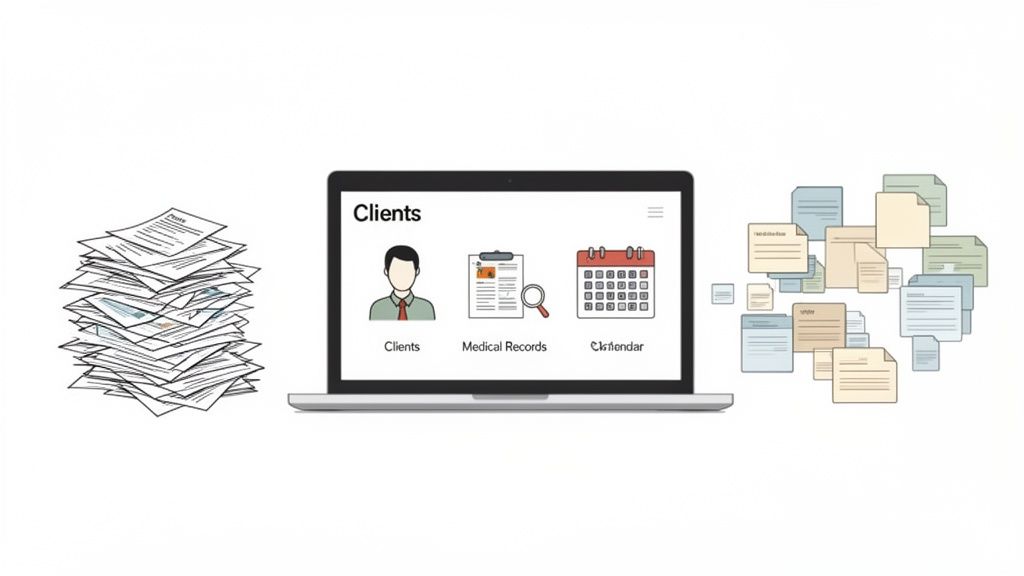
Running a personal injury firm without dedicated software is like trying to conduct an orchestra without a conductor. It’s a whirlwind of information—police reports, stacks of medical records, confusing insurance policies, constant client calls, and unforgiving legal deadlines. Trying to juggle all of that with paper files, scattered spreadsheets, and a bursting email inbox isn't just inefficient; it's a real threat to your firm’s bottom line and professional reputation.
This is precisely the problem that pi case management software was created to solve. It’s not a generic project management tool shoehorned into a legal setting. It's a dynamic workspace engineered from the ground up for the complex lifecycle of a PI claim.
Taming the Chaos of Information
At its heart, this software brings order to the mountain of data that comes with every single case. By creating a single, reliable source of truth, it puts an end to the frantic search for a misplaced document or the last-minute scramble to find an update before a client calls. Everyone on your team is on the same page, all the time.
Everything gets organized logically within a dedicated case file:
- Client Details: Contact information, incident reports, and intake notes.
- Medical Treatment: A clean, chronological log of providers, appointments, diagnoses, and bills.
- Case Documents: All legal filings, evidence, correspondence, and demand letters.
- Important Deadlines: Statutes of limitations, court dates, and automated follow-up reminders.
To get a better handle on what this involves, it helps to understand the nuts and bolts of how claims are handled. A comprehensive claims processing software guide offers a deeper look into how these systems manage the financial and logistical side of things from beginning to end.
More Than Just Organization
Great PI software does more than just store information—it actively helps you resolve cases. By automating the repetitive, administrative tasks that bog down your staff, it frees them up to focus on high-value work like case strategy, negotiation, and trial prep. This is the key to shifting from reactive busywork to proactive legal work that actually impacts client outcomes.
The right platform doesn’t just help you manage your current caseload; it builds the operational backbone for sustainable growth. It transforms chaotic, unpredictable workflows into a reliable, repeatable process for winning cases.
Ultimately, investing in PI case management software is an investment in your firm's efficiency, accuracy, and client satisfaction. It minimizes the risk of costly human error, ensures you never miss a critical deadline, and gives your team the tools they need to achieve the best possible results for the people you represent.
The Core Features That Drive Modern Law Firms
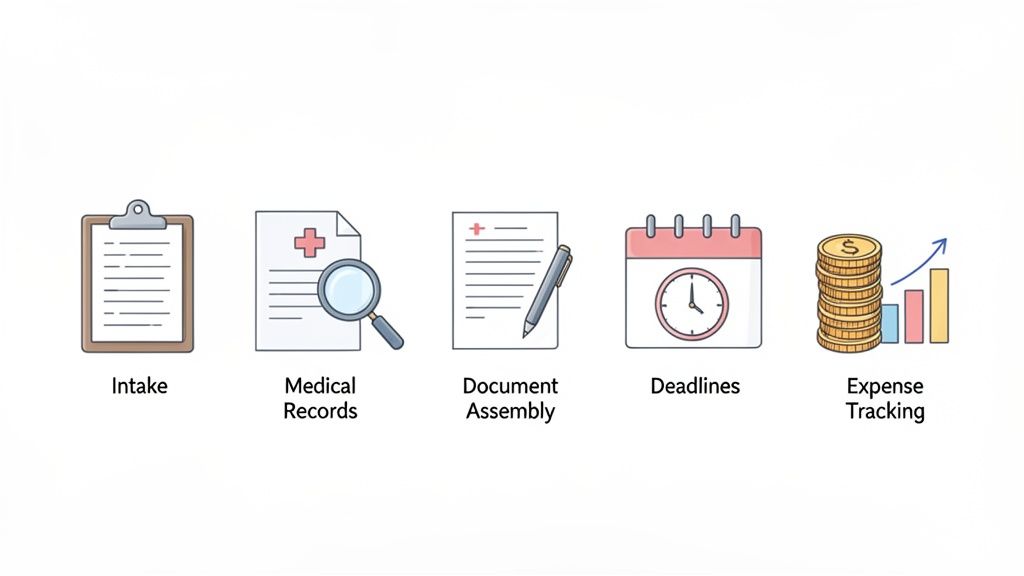
To really get why PI case management software is so essential, you have to look past the general idea of "getting organized" and see the specific tools that make a high-performing firm tick. These features aren’t just digital add-ons; they are built to solve the most stubborn, time-sucking problems in personal injury law.
Think of these features as a pit crew for a race car. Every tool has a specific job—changing tires, refueling, making adjustments—but they all work together to make your firm faster, more reliable, and better positioned to win. They directly attack the daily friction that burns up billable hours and invites unnecessary risk.
Streamlined Client Intake and Case Initiation
The first conversation with a potential client is everything. A clunky intake process that relies on paper forms or a messy chain of emails isn't just slow—it's a recipe for mistakes. It's shockingly easy to miss a key detail that could cause major headaches later.
Modern software puts this entire process on autopilot. You can send a digital intake form directly to a client's phone or computer, and the information they enter instantly creates and populates a new case file. This ensures every critical detail, from the specifics of the incident to their initial injuries, is captured correctly right from the start.
This approach accomplishes two huge things:
- Consistency: It creates a standard operating procedure for opening every new file, guaranteeing a complete and uniform foundation for every case.
- Speed: It slashes the administrative time needed to get a case off the ground, letting your team dive into the real work almost immediately.
This structured start also makes a great first impression, showing clients your firm is efficient and on the ball from day one. To learn more about how these platforms give you a bird's-eye view of your entire operation, check out our guide on case management for law firms and see the power of a central hub.
Intelligent Medical Records and Document Management
A personal injury case is built on a mountain of documents, especially medical records. The old way of doing things involves an endless loop of phone calls, faxes, and follow-ups just to get records from doctors and hospitals. When they finally show up, you're left with a disorganized pile of paper or a folder full of terribly named PDFs.
PI software turns that chaos into a clean, digital system. Your team can send and track medical record requests directly from the platform. As records come in, they are digitized and neatly filed away in the client's case, creating a single source of truth that everyone on the team can access.
A dedicated system means no more scrambling to find a folder when a client calls. Communication becomes quicker, more accurate, and more professional when case managers have every piece of information at their fingertips.
This same logic applies to all case documents—police reports, photos, insurance policies, and legal letters. When every file is organized and searchable, your team stops wasting time on administrative scavenger hunts and can focus on what actually matters: building a strong case.
Automated Calendaring and Deadline Tracking
Missing a statute of limitations is a cardinal sin for a PI attorney. Trying to manage deadlines with sticky notes, manual calendar entries, or a shared office whiteboard is just asking for trouble.
A rock-solid calendaring system is the backbone of any good PI software. It automatically calculates and tracks every critical deadline based on the date of the incident and specific jurisdictional rules. More importantly, it sends automated reminders to the whole team well in advance, creating layers of protection against malpractice.
Beyond statutes, the system keeps track of all case-related dates:
- Court appearances
- Deposition schedules
- Discovery deadlines
- Client meetings
This functionality creates a master calendar for the firm, giving you a clear view of all upcoming commitments. It’s the proactive safety net you need to ensure nothing ever falls through the cracks.
Demand Letter Generation and Expense Tracking
Drafting demand letters and tracking case expenses are two other tasks that can drain hours from your day. This is where automation really shines. Document assembly tools let you create templates for demands, settlement statements, and other frequently used documents.
With a click, the system can pull all the necessary data—client details, medical bills, lost wages—directly from the case file and plug it into your template. A job that used to take hours is now done in minutes. This frees up your paralegals and attorneys to focus on work that requires strategic thinking.
At the same time, integrated expense tracking keeps a running, real-time total of every cost tied to a case. This financial clarity is crucial for making smart settlement decisions and making sure your firm gets back every penny it's owed.
To wrap it up, these features work together to create a more efficient and less risky practice. The table below breaks down how each component directly impacts a PI firm's day-to-day work.
Essential Features of PI Case Management Software
| Feature | Primary Function | Key Benefit for PI Firms |
|---|---|---|
| Client Intake Automation | Captures new client and case information via digital forms. | Reduces manual data entry, eliminates errors, and accelerates the case opening process. |
| Medical Records Management | Sends, tracks, and organizes all medical record requests and documents. | Centralizes critical evidence, saving paralegal time and preventing lost records. |
| Document Management | Provides a central, searchable repository for all case-related files. | Ensures instant access to information, improving team collaboration and client service. |
| Automated Calendaring | Calculates and tracks statutes of limitation and other key deadlines. | Prevents missed deadlines and significantly reduces the risk of legal malpractice. |
| Document Assembly | Populates templates (e.g., demand letters) with case-specific data. | Drastically cuts down on drafting time, freeing up staff for more substantive legal work. |
| Expense Tracking | Logs and manages all costs and liens associated with a case. | Provides a clear financial picture for settlement negotiations and ensures full cost recovery. |
Each of these tools on its own is a powerful time-saver. When combined in a single platform, they transform how a firm operates, allowing your team to handle more cases with greater accuracy and less stress.
How the Right Software Unlocks Your Team's Potential
Good software isn’t just about a list of features; it's about making your people better at their jobs. When a personal injury firm brings in the right platform, the impact is felt everywhere. It changes how work gets done day-to-day and ultimately drives the success of the entire firm. This isn't just another tool—it's about building a single, streamlined system where everyone can truly shine.
This technology helps your team shift from being reactive to proactive. Instead of spending half their day chasing down information, they can focus on the strategic work that actually wins cases and keeps clients happy. The best PI case management software gives each person on your team exactly what they need to excel in their role.
A New Level of Focus for Attorneys
For any attorney, time is the one resource they can never get back. Every minute spent digging for a document or manually filling out a form is a minute they're not spending on legal strategy, negotiating with adjusters, or talking to clients. The right software gives them those hours back.
Think about it: with automated document assembly, an attorney can draft a detailed demand letter in a fraction of the time it used to take. Instead of spending a full day poring over a mountain of medical records, they can pull up an AI-generated summary that highlights the most critical information. This lets them get to the heart of a case faster and build a stronger, more persuasive argument from the start.
This newfound efficiency means attorneys can focus on the high-value work they were hired to do—using their legal expertise to get the best possible results for their clients.
Supercharging Paralegals and Case Managers
Paralegals and case managers are the engine room of a PI firm, and they’re often drowning in administrative tasks. A centralized software platform completely changes their world by cutting down on endless manual data entry and repetitive busywork.
Picture a paralegal juggling dozens of cases. With the right system, they no longer have to dig through messy paper files or scattered network folders to find what they need. Every piece of information, from the client's contact details to their latest medical treatment logs, is organized and accessible in one place.
- Less Chasing: Automated medical record requests and follow-ups mean no more playing phone tag with providers.
- Clearer Direction: Centralized task lists and case timelines give them a clear roadmap of what to do next, preventing things from falling through the cracks.
- More Capacity: By cutting out the administrative drag, paralegals can handle more cases effectively without feeling overwhelmed and burning out.
When you centralize case data and automate routine tasks, you free up your paralegals to become true case strategists. They can start anticipating what’s needed next and move files forward with more autonomy and confidence.
A well-organized system creates a calmer, less stressful work environment, which is absolutely critical for keeping your best people on board.
Strategic Oversight for Managing Partners
For managing partners, the benefits go way beyond day-to-day tasks—they touch the health and growth of the entire firm. Good software provides a 30,000-foot view of the firm’s performance, transforming mountains of case data into clear, actionable insights. To truly empower your legal team, a comprehensive understanding of law firm client intake processes is essential. A complete guide to law firm client intake can provide foundational knowledge for optimizing these critical first steps.
With access to real-time dashboards, partners can keep a close eye on the metrics that matter most to the bottom line:
| Key Metric | Strategic Benefit |
|---|---|
| Case Cycle Time | Pinpoint and clear bottlenecks to close cases faster. |
| Average Settlement Value | Spot trends to sharpen negotiation tactics. |
| Caseload Per Attorney | Make sure work is distributed evenly for peak productivity. |
| Client Acquisition Costs | Measure marketing ROI to allocate budget more effectively. |
This data-driven approach means managing partners can stop relying on gut feelings and start making decisions based on hard evidence. They can identify emerging trends, forecast revenue with greater accuracy, and guide the firm toward smart, sustainable growth. Better efficiency also leads directly to happier clients, and happy clients lead to more referrals—the lifeblood of any successful PI practice.
The Next Frontier: AI in Personal Injury Law
The world of pi case management software is taking a massive leap forward. For years, the gold standard was "automation"—tools that could handle repetitive, rule-based tasks like firing off form letters or tracking deadlines. It was a huge help, no question. But that’s not the same as genuine artificial intelligence. Now, AI is stepping onto the scene to take on complex, cognitive work that was once the exclusive domain of skilled legal professionals.
This isn't just an upgrade; it's a fundamental change in how we work. Instead of just organizing your data, AI-powered platforms can now understand, analyze, and make sense of it. They're becoming analytical partners, capable of sifting through mountains of unstructured information, spotting critical patterns, and helping you build a stronger case right from the start. We're moving beyond simple efficiency and into territory that directly shapes case strategy and improves outcomes.
From Automation to True Intelligence
Think of it this way: simple automation is like a factory assembly line. It performs the same task perfectly, over and over again. AI, on the other hand, is like a seasoned analyst who can read a complex report, understand its nuances, and draw insightful conclusions. That’s the critical difference in today’s top-tier personal injury software.
These advanced systems are now tackling some of the most grueling, time-consuming jobs in a PI firm. Take the monumental task of reviewing thousands of pages of medical records. It’s a job that can tie up a paralegal for days, even weeks, of painstaking work—all while other critical tasks pile up.
AI changes that workflow completely. It can process a jumble of medical files in minutes, not days, and deliver a perfectly structured, easy-to-read summary. This isn’t just about saving time. It's about uncovering the crucial details—the "smoking guns"—that might get missed in a manual review. For a closer look at how this technology is fundamentally changing legal work, check out our insights on AI for personal injury lawyers.
AI-Powered Differentiators in Practice
The real-world applications of AI are already giving forward-thinking firms a serious competitive edge. Instead of just being a digital filing cabinet, AI actively works with your documents to create real value.
Here are a few game-changing examples of what this looks like on the ground:
- Instant Medical Chronologies: Imagine feeding hundreds of pages of records into the system and, moments later, getting back a clean, chronological timeline. AI extracts every key event, diagnosis, treatment, and provider, giving attorneys an immediate, clear overview of the client’s entire medical journey.
- Intelligent Demand Letter Drafting: By pulling together case facts, medical summaries, and expense logs, AI can generate a powerful first draft of a demand letter. It weaves the narrative of the case together, saving dozens of hours and letting your legal team focus on refining the argument and strategy.
- Predictive Case Valuation: Some of the most advanced platforms analyze historical case data to offer insights into potential settlement values. This data-driven perspective helps attorneys set realistic client expectations and negotiate from a much stronger position.
The graphic below shows how AI empowers every single member of your team—from the attorney mapping out strategy to the partner driving firm growth.
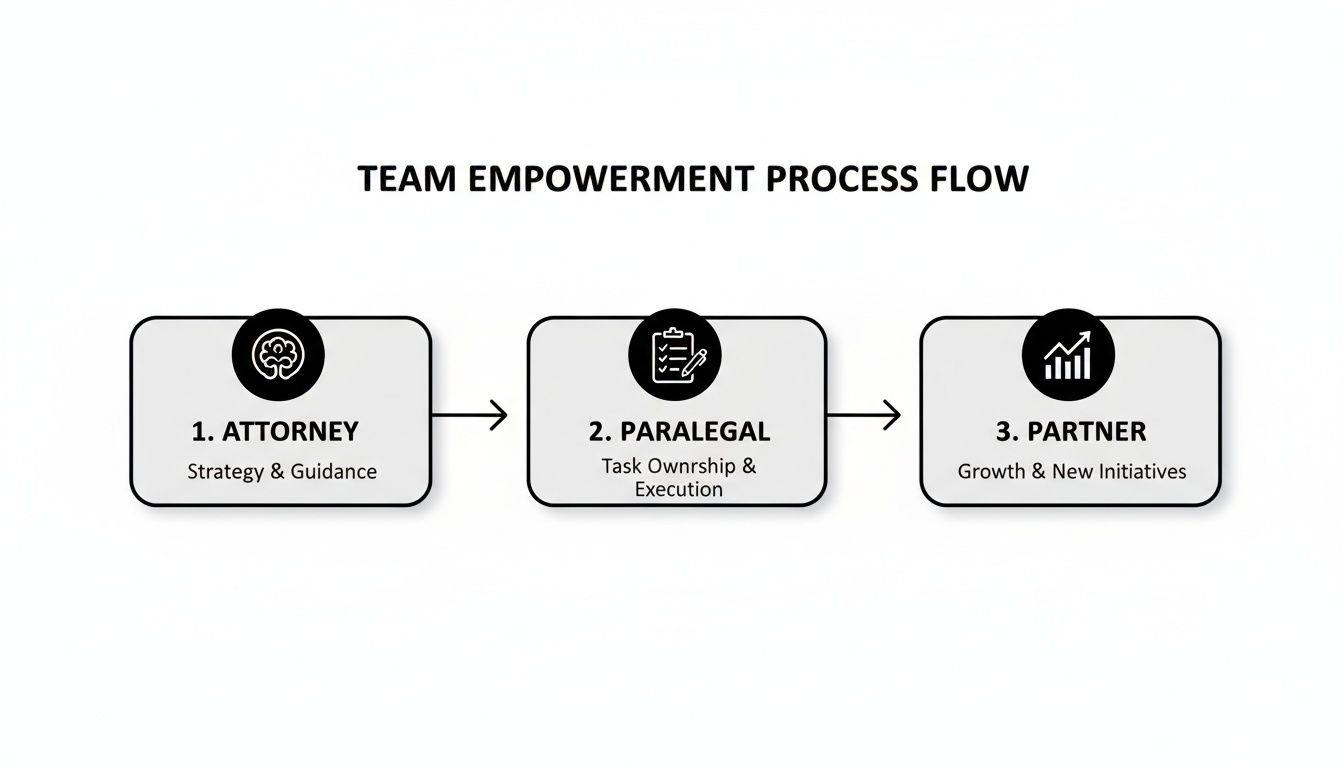
This flow makes it clear: when AI handles the heavy analytical lifting, it frees up your legal professionals to do the high-value strategic work that truly wins cases and scales a modern practice.
The goal of AI isn't to replace legal professionals but to supercharge their abilities. By taking on the deep analytical work, AI allows attorneys and paralegals to operate at the top of their licenses, focusing on what matters most: strategy, advocacy, and client relationships.
This isn't happening in a vacuum; it’s part of a much larger shift across the legal industry. Personal injury firms are quickly realizing that a blend of automation and intelligence is the key to getting ahead. The numbers back this up: the U.S. case management software market was valued at USD 2.37 billion in 2024 and is on track to hit USD 7.05 billion by 2034, growing at a blistering 11.52% CAGR. What’s fueling this fire? The integration of AI and machine learning, plus the ever-present need for better data security for sensitive client information.
By slashing dozens of manual hours from every single case, AI-enabled pi case management software helps firms build more compelling arguments, move cases along faster, and ultimately secure better settlements for their clients. It's the next logical step for any firm serious about building a more efficient and effective practice.
Choosing the Right Software for Your Firm
Picking the right PI case management software is a lot more than just a purchase. It's a foundational business decision that will directly impact your firm's efficiency and growth for years to come. The market is flooded with options, and every single one claims to be the magic bullet. To make a smart choice, you have to look past the shiny feature lists and focus on what actually matters for a personal injury practice.
Taking a methodical approach is the best way to avoid buyer's remorse. You want a system that becomes a long-term asset, not a short-term headache. That means zeroing in on the non-negotiables: security, scalability, and how well the software plays with the tools your team already uses every day.
The Non-Negotiables: Security and Compliance
In personal injury law, you're the guardian of your clients' most sensitive information, including mountains of Protected Health Information (PHI). A data breach isn't just an IT problem; it's a catastrophe that can shatter client trust, ruin your reputation, and bring on severe legal penalties. This is why top-tier security and HIPAA compliance are not just "nice-to-have" features—they're the absolute minimum entry fee.
When you're vetting a vendor, don't settle for a simple "yes" on security. You need to dig deeper during your demos with pointed questions:
- Can you explain your data encryption methods, for both data sitting on your servers and data in transit?
- What are your exact procedures for data backups and disaster recovery? What happens if your system goes down?
- Do you get regular third-party security audits, and are you willing to share the results?
A vendor who is serious about security will welcome these questions and give you clear, confident answers. If you get vague responses, consider it a massive red flag.
Planning for Future Growth and Scalability
The software that fits your firm perfectly today needs to be able to handle your ambitions for the next five years. A platform that can't grow with you will eventually become a bottleneck, forcing you into a painful and expensive migration later on. Scalability simply means your software can manage a growing caseload, more users, and an ever-increasing amount of data without slowing to a crawl.
Choosing a software partner is a long-term commitment. Ask yourself: Will this platform's feature set and infrastructure still meet our needs when our firm is twice its current size?
Thinking ahead like this is critical. You need a system that lets you add new user licenses without a hassle, integrates with technologies that might not even exist yet, and adapts as your practice evolves.
Integration and User Adoption
Here’s the hard truth: even the most powerful software is completely useless if your team refuses to use it. A user-friendly interface is everything. The platform has to feel intuitive, making the learning curve for your attorneys and paralegals as gentle as possible. A system that’s clunky or over-engineered will just lead to frustration and pushback.
Just as important is how well it integrates with your other tools. Your PI case management software should be the central nervous system of your firm, not an isolated data silo. It absolutely must communicate smoothly with the programs your team lives in every day, like:
- Email Clients: Syncing emails and attachments to the right case file should be automatic.
- Calendaring Systems: All deadlines, appointments, and court dates must stay synchronized across every platform.
- Accounting Software: The system should simplify billing, expense tracking, and financial reporting.
Good integrations eliminate the mind-numbing task of double data entry and ensure everyone is working from a single source of truth. To see how different options compare, checking out a list of the best case management software for law firms can give you a much clearer picture of the market.
Finally, never underestimate the quality of a vendor's support and training. A true partner invests in your success. That means they provide thorough onboarding, easy-to-access training materials, and responsive customer support to help you get the most out of your investment.
Implementing Your New Software for Maximum Impact
Choosing a powerful pi case management software is just the first step. The real magic happens during implementation—the detailed process of weaving the new platform into the daily fabric of your law firm. A thoughtful rollout is what separates a game-changing investment from an expensive, underused tool.
Think of it like buying a state-of-the-art engine for a race car. The engine itself is incredible, but you won't win any races until it’s properly installed, fine-tuned, and your driver knows how to get every ounce of power out of it. A rushed or sloppy implementation will leave your team frustrated and stuck in the same old inefficient habits.
A Roadmap for a Smooth Transition
A successful rollout depends on a clear, step-by-step plan that accounts for your technology, your people, and your processes. Without this structure, even the best software on the market can fail to deliver on its promise. The goal is to make the change feel less like a disruption and more like a long-overdue upgrade.
Your implementation plan should focus on three critical pillars:
- Data Migration: This is the careful, meticulous process of moving every existing case file, client contact, and document into the new system. Getting this right is non-negotiable—no data can be lost or corrupted.
- Team Training: You need to get everyone, from paralegals to partners, comfortable and confident with the new software. Proper training ensures they can hit the ground running on day one.
- Workflow Customization: The software needs to work for you, not the other way around. This step involves tailoring its features and automated processes to fit your firm's unique, battle-tested way of handling cases.
Measuring Success and Proving ROI
So, how do you actually know if the new software is working? You track the right numbers. Before you even start moving data, you need to establish baseline metrics, or key performance indicators (KPIs), to measure against down the road. This data-driven approach turns the conversation from "I think this is better" to "I can prove this is better."
A successful implementation isn’t just about getting the software running; it’s about achieving measurable improvements in your firm's performance. By tracking KPIs, you can prove the ROI and justify the investment.
Here are a few key metrics you should be watching:
- Reduced Administrative Hours: How much time is your team spending on repetitive tasks like drafting documents or chasing down medical records, both before and after the switch?
- Faster Case Cycle Times: What's the average time it takes to get a case from intake to settlement? You should see this number drop.
- Increased Caseload Capacity: Can your attorneys and paralegals now manage more cases effectively without sacrificing quality or feeling overwhelmed?
By focusing on a strategic implementation and tracking tangible results, your new pi case management software will become a true engine for growth, not just another line item on your expense report.
Frequently Asked Questions
Jumping into a new software platform always brings up a few key questions. We've gathered the most common ones we hear from personal injury firms to give you the straightforward answers you need.
Is PI Case Management Software Secure Enough for Client Data?
Yes, but only if you partner with the right vendor. The best platforms are built from the ground up with security at their core, specifically designed for the sensitive nature of personal injury cases and Protected Health Information (PHI).
Think of it like a bank vault for your data. Look for non-negotiable features like end-to-end data encryption, multi-factor authentication, and strict user permissions. A reputable provider will also be fully HIPAA compliant and can show you proof of regular, independent security audits.
How Much Time Can My Firm Realistically Save?
The time savings are substantial, and they grow as your team gets comfortable with the system. Most firms find they can cut down on 10 to 20 administrative hours per case. The biggest impact comes from automating the tedious, repetitive tasks that bog down your staff.
We're talking about things like:
- Compiling medical record summaries from hundreds of pages.
- Generating first drafts of demand letters.
- Keeping every critical deadline on the calendar and sending reminders.
When you add AI into the mix, the savings multiply. A task that used to take a paralegal days of manual review can now be done in minutes, freeing up your most valuable people to focus on strategy.
It's not just about saving time—it's about reinvesting that time where it matters most. Better case strategy, more effective negotiations, and happier clients are the real returns.
Can This Software Adapt to Our Firm's Unique Workflow?
Absolutely. Modern PI software isn't a rigid, one-size-fits-all solution. While they come with smart, pre-built workflows based on industry best practices, they are designed to be flexible.
You can customize almost everything—intake questionnaires, task templates, document fields—to match the processes your team already knows and uses. You shouldn't have to overhaul your entire operation just to fit a new tool. Make sure to ask about the depth of customization during any product demo.
Ready to eliminate manual hours and build stronger cases? See how Ares uses AI to automate medical record reviews and demand letter drafting, giving your firm a repeatable process for success. Learn more about Ares.